Windows & Doors · Tri-Cities, TN

Window & Door Repair & Replacement — Tri-Cities, TN

A sticking door, worn-out hardware, weatherstripping that's stopped doing its job — I repair what can be repaired and replace what can't.

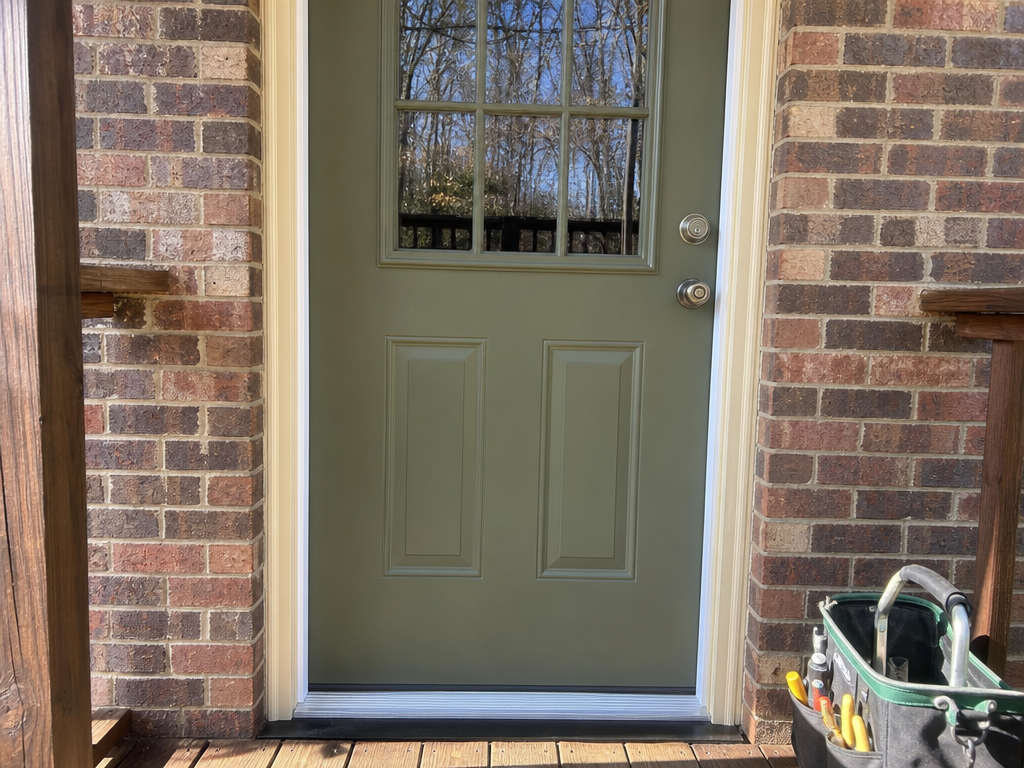
Cleanly installed exterior door with fresh weatherstripping and trim

Window & Door Repairs I Handle Across the Tri-Cities

Windows and doors take more abuse than almost anything else on a house, and after 25 years I've seen just about every way they fail. These are the jobs I get called for most:

Rotted sill, jamb, and threshold repair. Water finds the bottom of every opening eventually. I cut the rot back to solid wood and rebuild the sill or jamb rather than caulking over it and hoping.

Sticking or racked doors, re-hung to latch. As houses settle, doors stop closing right. Most of the time that's a hinge, a strike plate, or a frame adjustment — not a new door.

Weatherstripping and draft sealing. Worn or missing weatherstrip is the single biggest reason a door or window lets in a draft. I replace it, and where the whole opening needs sealed I handle weatherstripping and sealing the opening in the same visit.

Hardware, locks, and hinges. Deadbolts, handlesets, hinges that squeal or sag — straightforward changeouts and repairs.

Exterior trim and casing. The wood around a window or door takes the worst of the weather. That's trim, casing, and jamb carpentry I handle as part of the same visit so the opening looks finished, not patched.

Storm doors. Installed, adjusted, or replaced when the closer or hardware has given out.

Small window and door unit replacements. A single failed window, a rotted-out exterior door, a unit that's fogged or cracked — swapped and set square, with the trim finished around it.
Common Window & Door Problems in Older Tri-Cities Homes

A lot of what I see repeats itself from Elizabethton to Johnson City to Kingsport, because the housing stock shares the same age and the same weather:

A door that won't latch anymore because the house has shifted a little and the frame is no longer square to the slab. A draft you can feel standing near a window in January, even though nothing looks obviously wrong. A rotted sill under a back door where water has been running off the threshold for years. A double-pane window that's gone foggy between the panes — the seal failed and moisture got in for good. A threshold worn clean through from twenty years of foot traffic. None of these are dramatic on their own, but left alone they get worse, and a door that won't latch is a security problem as much as a comfort one.

Why Windows & Doors Fail Faster in the Tri-Cities & High Country

Openings take the brunt of our weather because they're the seams in an otherwise solid wall. Down in the valley — Elizabethton, Johnson City, Kingsport — we get better than 45 inches of rain a year, and a lot of it comes in sideways on wind-driven storms that find every gap around a window or door frame that isn't sealed tight. Freeze-thaw does the rest: water works into a hairline gap around a sill or jamb, freezes, expands, and works the wood and the weatherstrip a little looser every winter.

Older valley homes often still carry original single-pane windows or units that were never great to begin with, and every cold snap finds them — that's the draft you feel sitting near a window that never used to bother you.

Up in the NC High Country — Boone, Banner Elk, Blowing Rock — the elevation runs 3,000 to 4,000 feet, and single-digit cold with ice is normal for weeks at a stretch. A lot of those properties are cabins and second homes that sit empty between visits, so a failed seal or a rotted sill can go unnoticed for weeks — long enough for a small problem to become a much bigger one by the time anyone's back to see it.

Repair vs. Replace the Window or Door — How to Know

Here's the honest version. A rotted sill, a sticking door, worn weatherstrip, or a single failed unit — that's mine, and it's almost always a repair or a one-unit swap rather than a full replacement. Good wood next to bad can be repaired, and a door that won't latch usually just needs to be re-hung properly, not replaced.

A whole-house window replacement project is a different animal. That's a window company's job — full-house measuring, ordering, and installation at scale — and I'll tell you that straight rather than take it on and stretch myself thin. A foggy double-pane unit is often a glass or sash swap rather than a whole new window, and I'll tell you which one you're actually looking at before any work starts. When a project is bigger than what's in front of you, having someone in your corner who isn't trying to sell you the biggest version of the job is worth having before you sign anything.

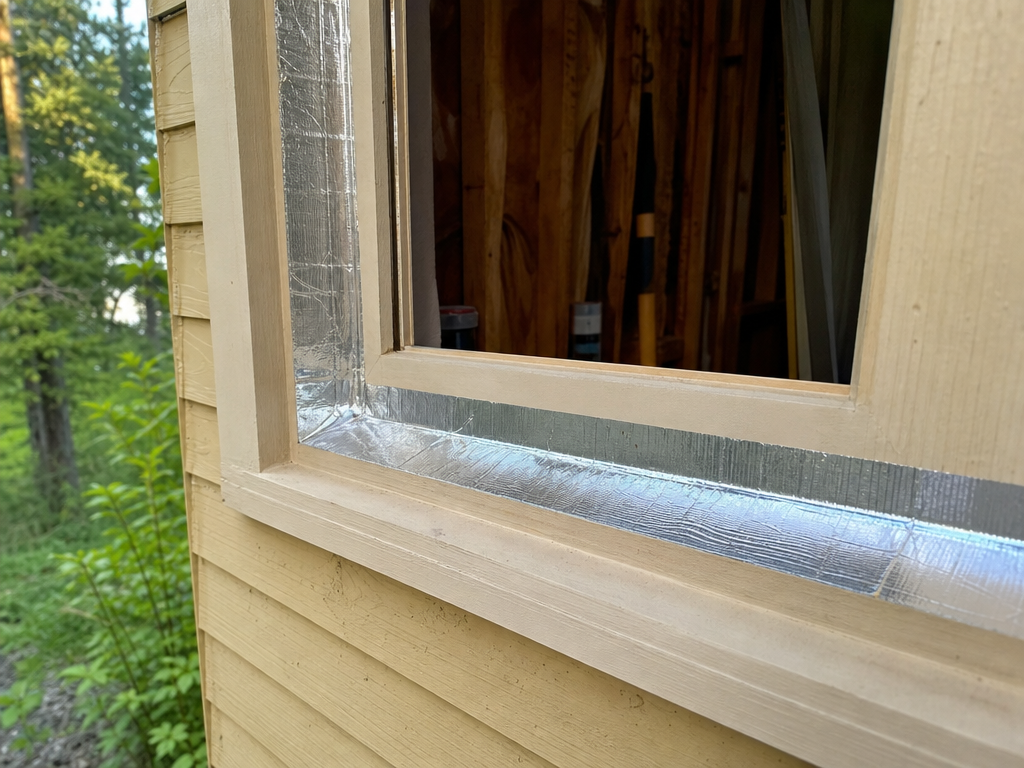
Flashing tape applied around a window opening before the unit is set

What a Window or Door Job Done Right Actually Involves

Anybody can screw a new door into an old frame. Doing it so it lasts is the whole difference:

Finding and stopping the water first. If water's getting behind the trim or under the sill, that gets solved before anything new goes in. A new unit set on top of an unsolved leak just fails again.

Cutting rot back to solid wood. I don't leave punky wood behind a new sill and hope it holds. It gets chased back to sound material, even when that makes the job bigger than either of us expected.

Flashing the opening properly. Every window and door opening needs flashing that sheds water down and out, not one that traps it behind the trim.

Shimming and setting square so it operates. A door or window that's out of square binds, drags, or won't latch no matter how many times you adjust the hardware. Getting it square is what makes it work right for years, not months.

Weatherstripping and sealing. The right weatherstrip, properly seated, is what actually stops a draft — not a bead of caulk smeared around the trim.

Insulating the gap and leaving it weathertight. The space between the frame and the rough opening gets insulated, not left hollow, and the whole opening is weathertight before I call it done.

Tying it back into the wall outside. An opening is only as sound as the wall around it, so I seal and blend the siding where it meets the opening rather than leaving a gap for water to walk back in.

Finishing the inside, too. Setting a new door or window usually disturbs the interior wall, so I patch the drywall around the new opening myself instead of leaving you a hole to coordinate with someone else.

Window & Door Work Done Wrong — And Why It Comes Back

Most of the callbacks I see share the same handful of shortcuts. Caulk smeared over a rotted sill instead of replacing the wood underneath it. A door planed down to fit instead of re-hung square, which just moves the binding problem somewhere else. No flashing behind the trim, so water finds its way back in around the frame within a season or two. Expanding foam jammed into the gap around a window, which can actually bow the jamb and keep the sash from operating right. A replacement unit set out of square that never really seals no matter how much caulk goes around it. Every one of these looks fine walking by and fails the next time the weather turns on it.

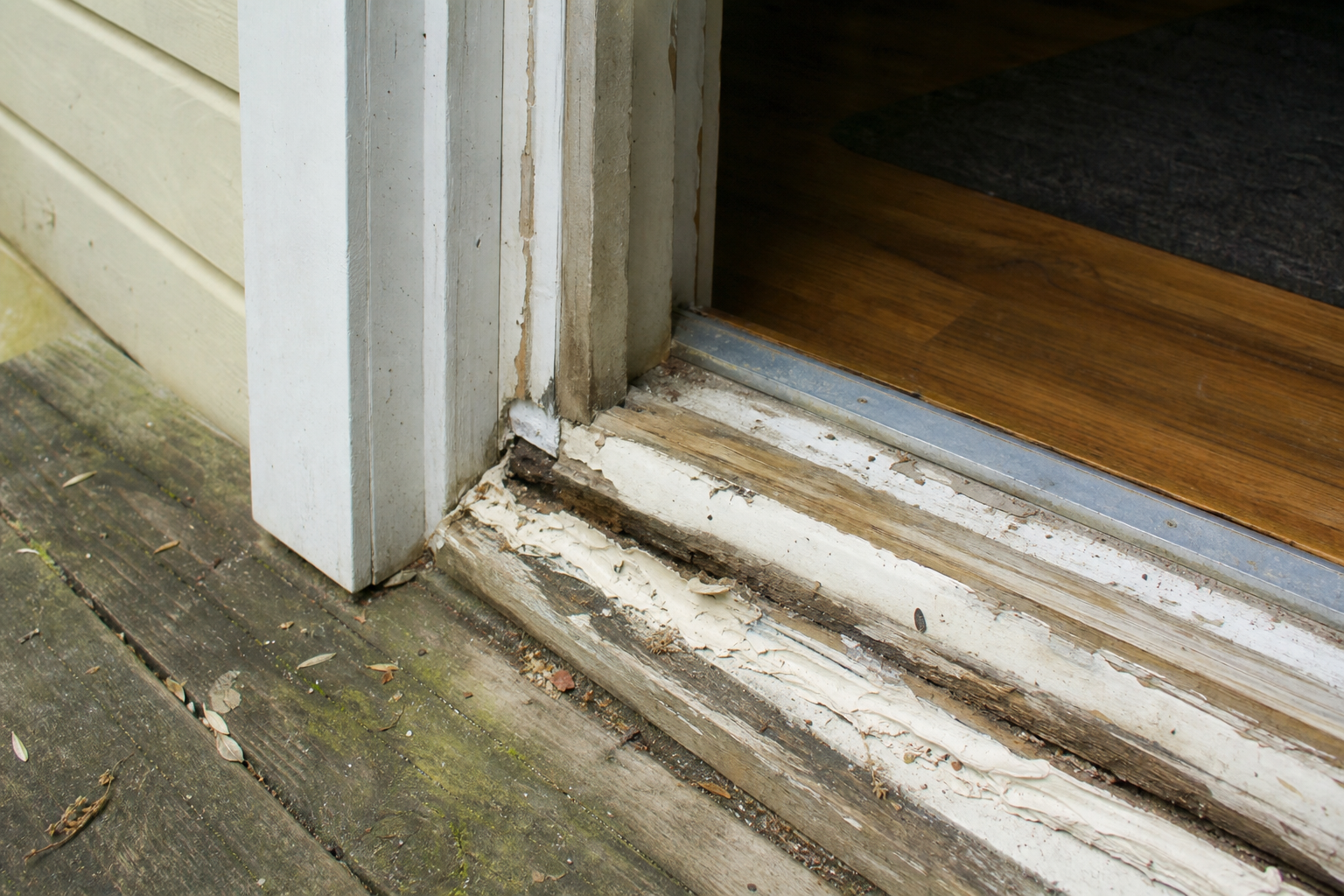
Caulk smeared over a rotted door sill with no flashing underneath
Caulk over a rotted sill with no flashing hides the rot for a season while water keeps getting behind the opening.

How a Window or Door Job Goes With Me

1. You call and tell me what's going on. A photo of the sticking door or the soft sill helps me show up prepared instead of guessing.

2. I come look — and I find the real cause, not just the symptom. A door that won't latch or a sill that feels soft usually has a story behind it worth understanding first.

3. You get the honest scope — a repair, a unit swap, or "this is a whole-house window project and here's who I'd call." No upsell either direction.

4. We get it on the calendar. I'm a one-man shop, so I tell you straight when I can be there instead of promising tomorrow and not showing up.

5. I do it right and walk it with you. If the door doesn't close the way you expected or a seal doesn't look right, I'd rather fix it on the spot than have you second-guess it later.

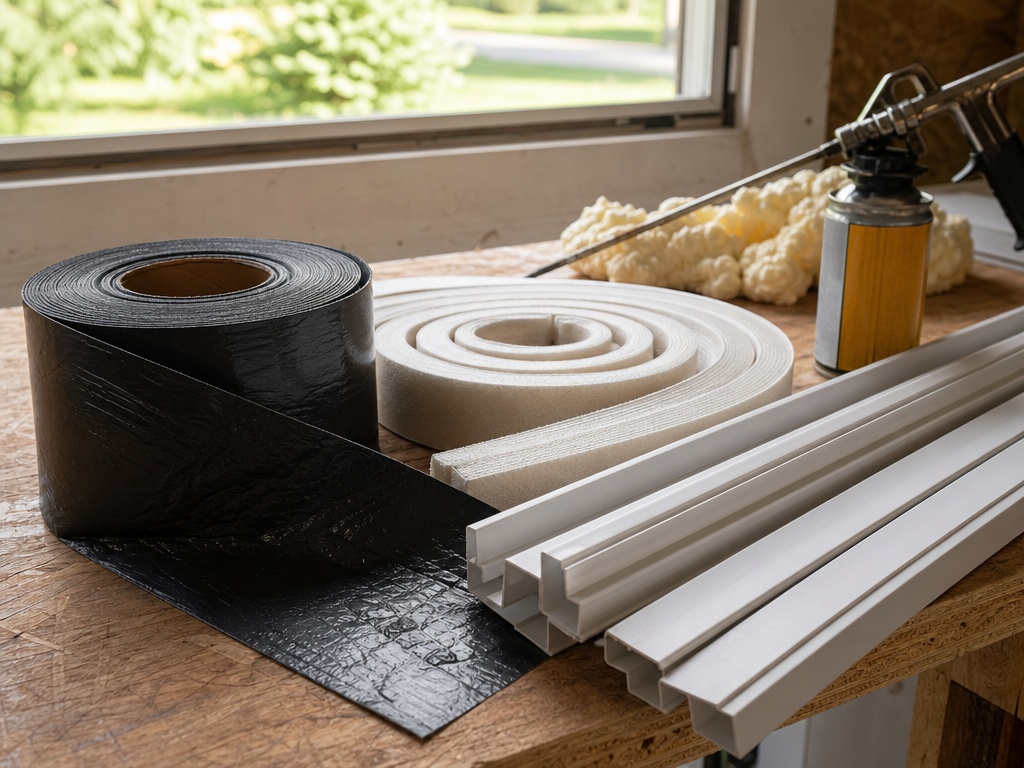
Flashing tape, weatherstripping, PVC trim, and foam on a workbench

Materials I Use

On a window or door job, the materials are what keep the fix from becoming next year's callback. I use quality flashing tape around every opening, not the bargain roll that stops sticking after a few cold nights. Exterior trim goes back in PVC or composite where it's exposed to weather, since it doesn't feed rot the way old wood does.

Weatherstripping and door sweeps are matched to the opening rather than a one-size-fits-all strip, and gaps get filled with low-expansion foam that seals the space without bowing the jamb the way high-expansion foam can. When a unit needs replacing, I install name-brand fiberglass or vinyl windows and doors with low-E glass, sized and matched to the opening rather than a generic stock fit. The right materials in the right spot are what make an opening weathertight for years instead of one winter.

Frequently asked questions

Should I repair or replace my windows?+

Depends on what's actually wrong. A rotted sill, worn weatherstrip, or a single failed unit is usually a repair or a one-unit swap. A whole-house window project is a bigger job I'll point you to a window company for, and I'll tell you honestly which one you're looking at.

Can you fix a foggy double-pane window?+

Often that's a glass or sash swap rather than a whole new window, since the frame itself is usually still fine. I'll take a look and tell you which repair actually fits before any work starts.

Why won't my door latch anymore?+

Usually the house has settled slightly and the frame is no longer square to the strike plate. Most of the time that's a hinge adjustment or a re-hung door, not a new one.

Do you do whole-house window replacement?+

No — that's a window company's job at that scale, and I'll tell you so rather than take on more than I can do well. Single-unit replacements and repairs are exactly what I handle.

Can you fix a rotted sill without replacing the whole door?+

Usually, yes. If the door itself and the rest of the frame are sound, I can rebuild the sill and re-hang the door rather than replacing the entire unit.

How soon can you get to a window or door repair?+

I'm a one-man shop, so I'll tell you honestly what my calendar looks like when you call rather than promise tomorrow and not show. A door that won't secure the house gets priority.

Planning something bigger than a repair?

Before you hire your next contractor, have someone in your corner who's built these for 25 years.

Get an independent read on your estimates

Serving the Tri-Cities & NC High Country

Get your window or door job on the calendar