Aging-in-Place Safety · Tri-Cities, TN

Grab Bars & Aging-in-Place Safety — Tri-Cities, TN

Bathroom safety bars, thresholds, and small ramps that let someone stay in their own home safely — installed so they hold real weight, not just look the part.

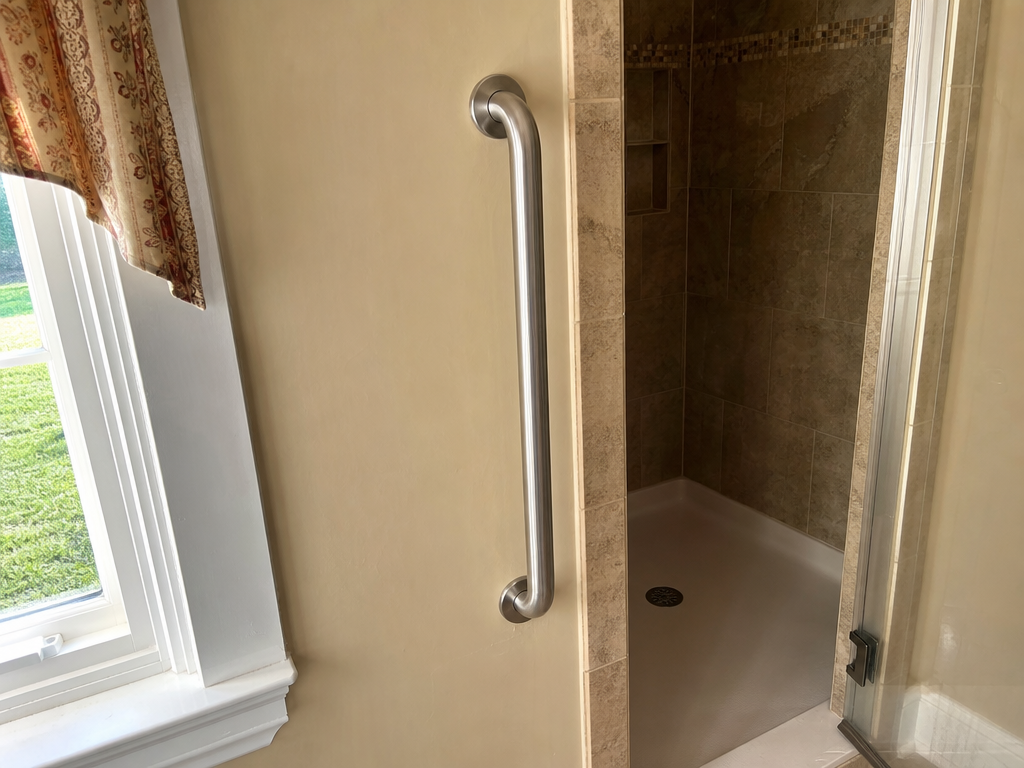
Sturdy stainless grab bar installed beside a walk-in shower

Aging-in-Place Work I Handle Across the Tri-Cities

This work isn't one product — it's a handful of small, deliberate changes that add up to a home someone can move through safely. These are the jobs I get called for most:

Grab bars anchored into studs or blocking. Beside the tub, in the shower, next to the toilet — installed into real structure, not drywall alone, because they have to hold actual body weight.

Shower and tub bars, plus comfort-height toilets. A taller toilet and a well-placed bar next to it make a daily routine noticeably easier, and I'll often handle both in the same visit as other bathroom updates and repairs.

Handheld and slide-bar showers. Swapping a fixed showerhead for a handheld on a slide bar, sometimes alongside walk-in and fixture changes that lower the barrier into the shower itself.

Thresholds and small ramps. Leveling out a raised threshold or building a short ramp over a step — that's the blocking, thresholds, and small ramps side of carpentry more than anything else.

Stair and hallway railings. A rail that's actually anchored, not just screwed into whatever happened to be there.

Doorways and access. Widening the swing, easing a threshold, or adjusting a sticking door so a walker or wheelchair clears it — the threshold and door adjustments for access that make the difference between a room someone can use and one they can't.

Better task lighting. Brighter, better-placed bathroom and hallway lighting so steps, thresholds, and floor changes are easy to see.

Lever door handles. A simple swap from a round knob to a lever that's easier on hands and grip.
Common Aging-in-Place Needs in Older Tri-Cities Homes

Most of what I get called for falls into a short list of situations, and none of them are unusual — they're just what happens when a home built decades ago has to keep working for the people living in it now.

A tub with a high step-over edge that's gotten harder to get into and out of. A bathroom with a towel bar or a soap dish that someone's started leaning on out of habit, because there's nothing actually meant to hold weight. A threshold between rooms — or at the front or back door — that's just tall enough to catch a foot. A staircase or a short run of steps with a rail that's loose, missing, or was never installed to begin with. Hallways and bathrooms lit by a single dim fixture that made the room hard to see clearly even ten years ago. None of these are emergencies by themselves. They're the kind of thing that's easy to fix before it becomes a problem, which is exactly the point.

Why Aging in Place Is Harder in Older Tri-Cities & High Country Homes

A lot of the housing stock from Elizabethton to Johnson City to Kingsport is decades old, and it was built for the families and expectations of that era — not for accessibility. Narrow bathroom doorways, tubs with a high step-over edge, steep interior stairs, and hallways just wide enough for one person are the norm rather than the exception. None of that was a flaw when the house was built. It's just a mismatch that shows up later, and it's completely fixable with the right work in the right places.

Up in the NC High Country — Boone, Banner Elk, Blowing Rock — the layout adds another wrinkle. Homes up at three to four thousand feet are often built on a slope, with multiple levels connected by interior or exterior stairs, and steps up to the front door that see snow and ice for a good part of the winter. A solid rail and a safe, level threshold matter more there, not less, when the ground outside is doing its own thing half the year.

And a good number of these homes, valley and mountain alike, are places people have lived in for twenty, thirty, forty years. The goal of this work isn't to change that. It's to make the home someone already knows and loves keep working for them, for as long as it reasonably can.

What Makes a Grab Bar Actually Safe — How to Know

A grab bar is only as strong as what it's screwed into. That's the entire honest version of this section. A bar mounted through drywall alone — even with a fancy plastic anchor — is rated for towels, not for someone putting their full weight on it in a moment when they actually need it to hold. A bar is only as safe as the stud or solid blocking behind it.

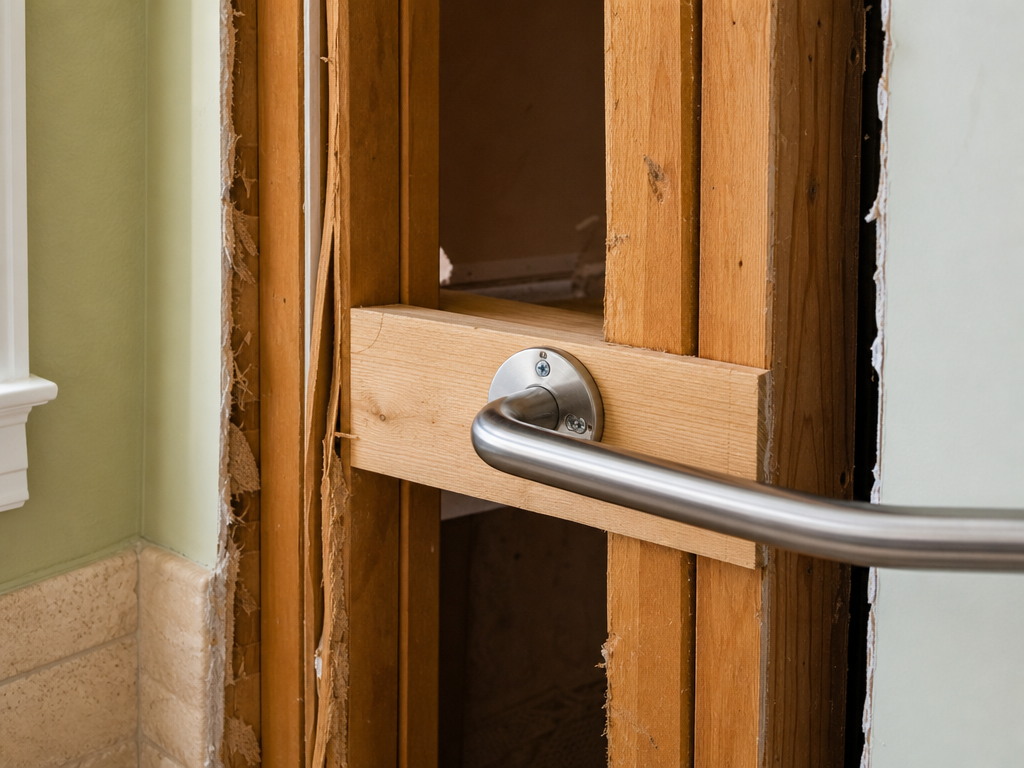
So the first thing I do on any grab bar job is find out what's actually behind the wall. Where there's a stud in the right spot, it anchors there. Where there isn't — which is common, because bars rarely land exactly on 16-inch centers — I open the wall enough to add solid wood blocking, then patch it back so it's invisible when I'm done. That extra step is the difference between a bar that holds and one that doesn't.

I'll also tell you honestly when a request has outgrown handyman scope. A single grab bar, a comfort-height toilet, a handheld shower — that's squarely mine. A full accessible-bathroom remodel, with a reframed shower pan and a widened doorway, is a bigger project, and that's when I'll say so and help you think through what it actually needs, the same way I would as a contractor in your corner rather than someone trying to stretch a job past what it should be.

Grab bar anchored into solid wood blocking behind the wall

What Aging-in-Place Work Done Right Actually Involves

This work looks simple from the outside — a bar on a wall, a rail on a stair — and that's exactly why it's easy to do badly. Done right, it takes a few things every time:

Locating studs, or adding real blocking where there aren't any. No exceptions, no "should be fine."

Anchoring into structure rated for the load. Fasteners sized and placed for real pull force, not just what happened to be in the truck.

Correct height and placement for the person using it. A bar mounted at a generic height helps less than one placed where it's actually going to be used.

Slip-resistant surfaces where they matter. Inside the tub or shower floor, not just the grab bar itself.

Solid rails that don't flex. A stair rail that wiggles under a hand isn't doing its job, even if it looks fine standing still.

Hardware that's easy on hands. Lever handles and larger-diameter bars that don't require a strong grip to use well.

Grab Bars Done Wrong — And Why They're Dangerous

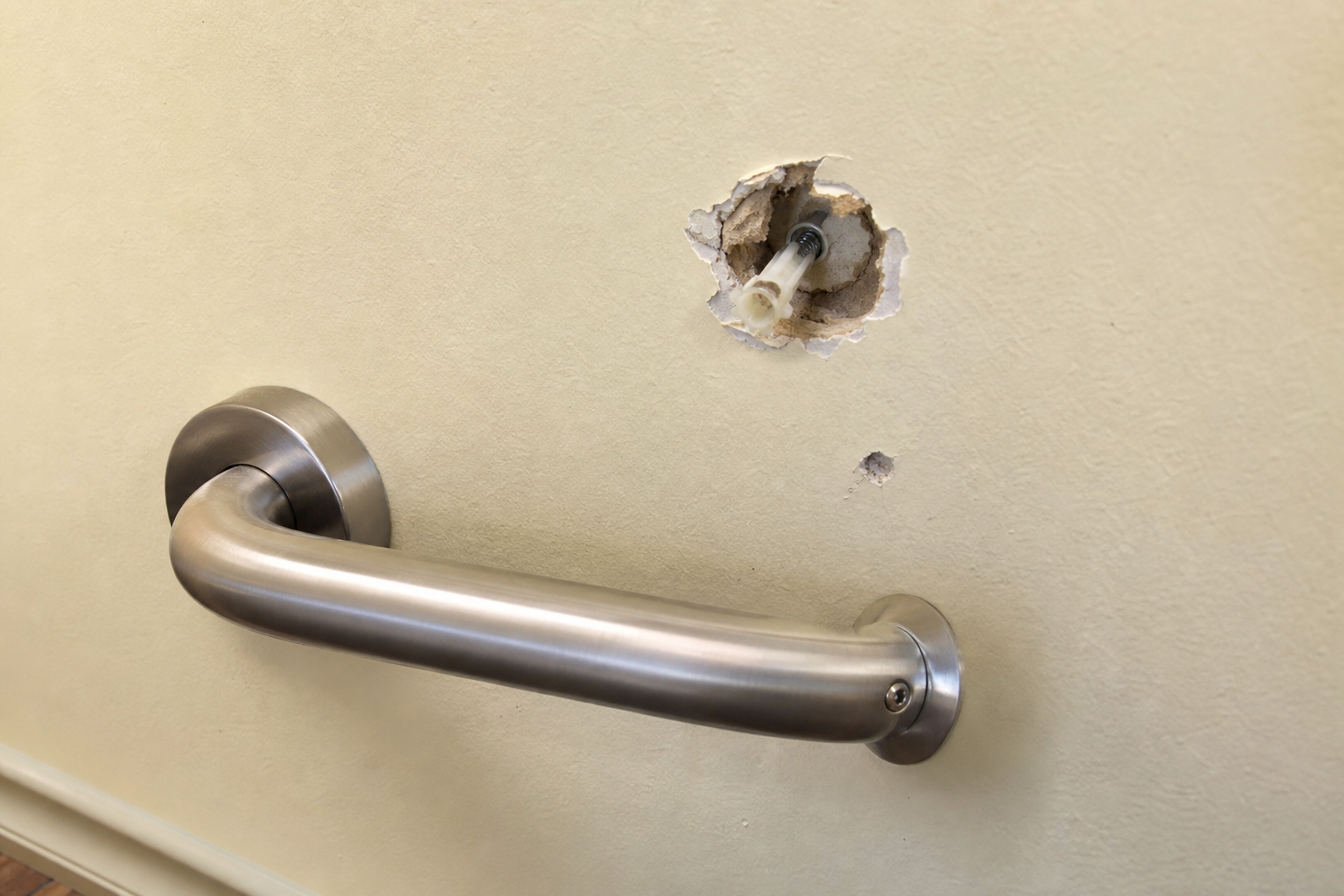
This is the part of the job where "looks fine" and "is fine" are two completely different things, and the gap between them is what I get called to fix. A bar screwed into drywall with plastic anchors that holds up fine to a light tug — right up until someone puts real weight on it and it lets go all at once. A bar placed where it was easy to install instead of where it's actually needed by the person using it. A suction-cup bar from a hardware store display, treated like it's load-bearing when it was never rated for that. A rail re-secured into wood that was already soft or rotted underneath, so the new screws have nothing solid to bite into either. Every one of these passes a casual glance. None of them should be trusted with someone's balance.

A grab bar pulled loose from drywall with a torn anchor hole
A grab bar screwed into drywall anchors lets go under real weight — it has to hit a stud or solid blocking.

How an Aging-in-Place Job Goes With Me

1. You call and tell me what's needed. A bar by the tub, a rail on the stairs, a threshold that's become a trip hazard — whatever the specific concern is.

2. I come look and check what's behind the walls. Stud locations, wall condition, and whether blocking needs to go in before anything gets mounted.

3. You get an honest plan. What it needs, what it'll take, and — if it's grown into a full remodel — a straight answer that it's bigger than a handyman visit.

4. We get it on the calendar. I'm a one-man shop, so I tell you straight when I can be there rather than promising tomorrow and not showing.

5. I do it right and walk it with you. I'll test it myself before I leave, and I'm glad to walk it with whoever's helping out, so everyone knows exactly what's there and how it's anchored.

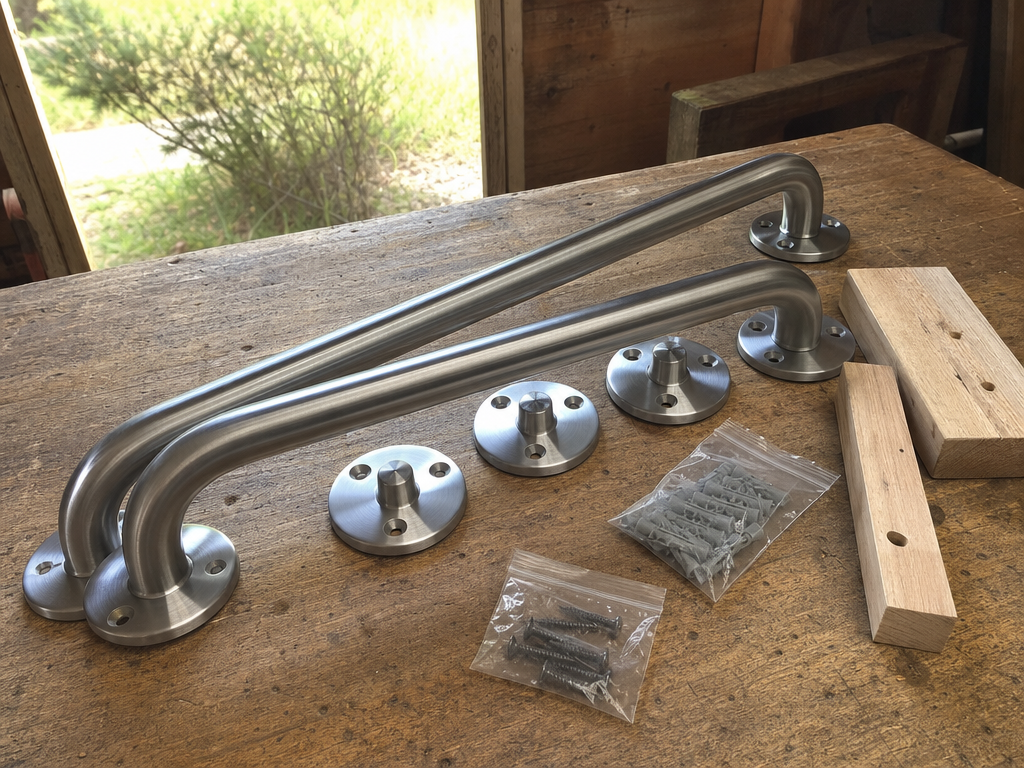
ADA-rated grab bars, stainless anchors, and blocking on a workbench

Materials I Use

I use ADA-rated grab bars sized to carry real load, not the lightest-duty bar on the shelf. Fastening is stainless anchors and load-rated hardware into studs or blocking I've added myself, sized for actual pull force rather than a quick screw-in. Where slip resistance matters — tub floors, shower pans — I use fittings built for wet, bare feet, not a cosmetic mat. Stair and hallway rail hardware is solid-mount, not the light-duty brackets made for a decorative shelf.

Every piece is chosen to carry real weight and hold up to daily use for years, not to look the part in a photo and fail the first time it's actually needed.

Frequently asked questions

Will the grab bar actually hold my weight — how is it anchored?+

It's anchored into a stud or solid wood blocking, not drywall alone. If there's no stud in the right spot, I open the wall and add blocking before the bar goes up, then patch it so it's invisible. That's what makes the difference between a bar that holds and one that doesn't.

Can you add a bar where there's no stud in the right place?+

Yes — that's routine. I open the wall enough to add solid blocking exactly where the bar needs to go, then patch and finish the wall so there's no sign it was ever opened up.

Do you install comfort-height toilets and handheld showers?+

Yes, both are regular work, often done in the same visit as grab bars and other bathroom updates and repairs.

Can you build a small ramp or fix a raised threshold?+

Yes — leveling a threshold or building a short ramp over a step is regular work, and it's structural carpentry more than anything else.

Do you do full accessible-bathroom remodels?+

Individual upgrades — bars, comfort-height fixtures, thresholds — are squarely handyman scope. A full remodel with a reframed shower and a widened doorway is a bigger project, and I'll tell you honestly when that's the case, plus an independent read on your estimates if you're comparing contractors.

How fast can you get this done?+

Most individual jobs — a bar or two, a rail, a threshold — are a single visit. I'm a one-man shop, so I'll tell you honestly when I can get there rather than promising tomorrow and not showing.

Planning a bigger accessibility project?

Before you hire your next contractor, have someone in your corner who's built these for 25 years.

Get an independent read on your estimates

Serving the Tri-Cities & NC High Country

Get your safety upgrade on the calendar