Decks & Porches · Tri-Cities, TN

Deck & Porch Repair & Small Builds — Tri-Cities, TN

Loose boards, wobbly railings, soft posts — deck and porch repair is always on the list. Small new builds, call and ask if I'm interested and it fits my schedule.

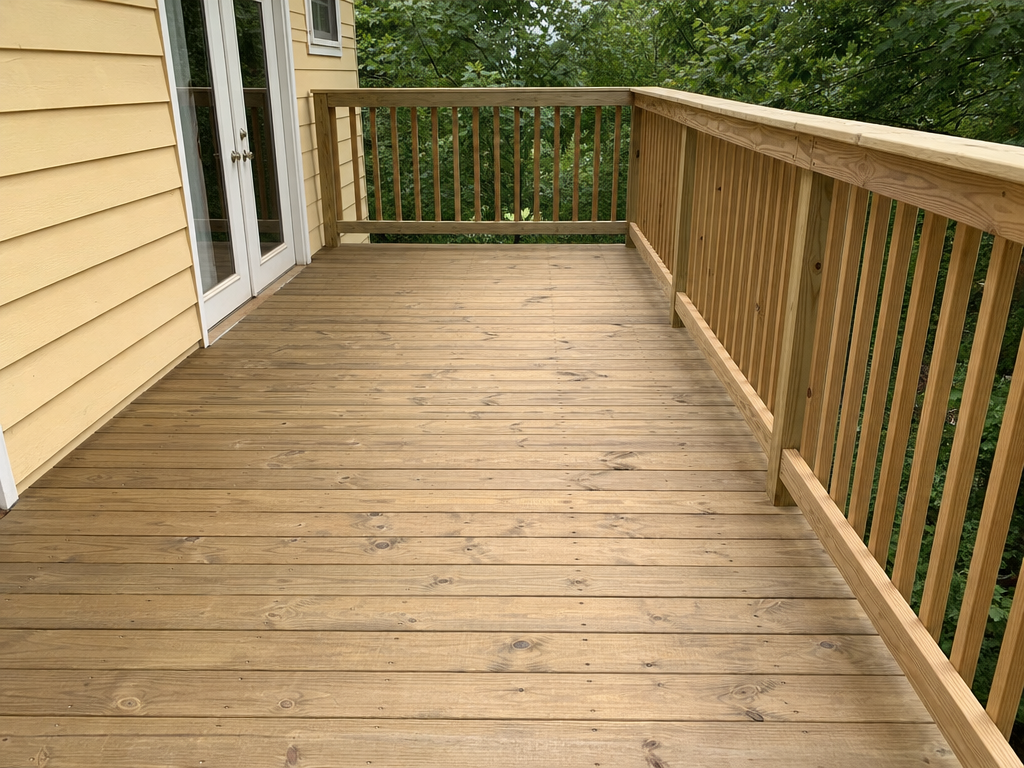
Repaired wood deck with solid railings in the Tri-Cities

Deck & Porch Repairs I Handle Across the Tri-Cities

Decks and porches take more punishment than almost anything else on a house, and after 25 years I've fixed most of what can go wrong with one. These are the calls I get most:

Rotted joist, beam, and ledger repair. The framing underneath is what actually holds the deck up, and it's usually the last thing anyone looks at until a board gives way. I handle structural wood repair the same way whether it's under a deck or inside a wall — find the bad wood, cut it back to solid, rebuild the structure so it carries load the way it's supposed to.

Deck-board replacement. Individual boards or whole sections gone soft, cupped, or splintering — swapped out and fastened properly instead of just screwed over the top of what's there.

Loose or wobbly railings. A railing that moves when you lean on it is a safety issue, not a cosmetic one, and it's usually a fast fix once I'm on site.

Stair and stringer repair. Steps that flex, a stringer that's split or pulling away, treads that don't sit flat anymore — steps get more direct impact than any other part of the structure.

Rotted post bases. Posts rot from the bottom up where they sit in or near concrete and hold moisture longest. I cut back to sound wood and rebuild the base so it's actually bearing weight again, not just standing there.

Re-securing and flashing a ledger board. The ledger is where the deck attaches to the house, and it's the single most common point of failure I see. If it's not lagged and flashed correctly, it's only a matter of time.

Before I get into repair, I'll often clean and prep the deck first — it's the only way to see the real condition of the wood instead of guessing under a layer of grime and mildew.
Common Deck & Porch Problems in Older Tri-Cities Homes

Most of what I see on a deck or porch call looks the same from Elizabethton to Johnson City to Kingsport, because the structures are a similar age and were built before anyone flashed a ledger or coated a fastener the way we do now:

Boards that feel spongy underfoot in one spot even though the rest of the deck looks fine — that's usually rot in the joist below, not the board itself. A railing that moves when you lean on it, which people live with far longer than they should. A ledger board pulling away from the house, which is the dangerous one — it means the deck's main connection to the structure is failing, and I don't treat that lightly. Rot where a post meets the concrete footing, hidden until you actually get down and check it. Fasteners that have popped, rusted, or bled orange stains down the wood, which tells me the wrong hardware went in the first place.

Where a porch ties into the house, siding damage often follows, and where the deck runs into a fence line or gate, fence and gate repair tends to be part of the same backyard punch list. None of these get better on their own. A soft board today is a soft joist next year.

Why Decks & Porches Take a Beating in the Tri-Cities & High Country

Outdoor wood structures take the worst of our weather, and there's no siding or roof to soften the blow. Down in the valley — Elizabethton, Johnson City, Kingsport — we get better than 45 inches of rain a year with the humidity to match, and that combination rots untreated or unflashed wood faster than most people expect. Add in freeze-thaw through the winter, and every fastener works a little looser, every board that trapped water splits a little further, cycle after cycle.

A poorly flashed ledger is the number one failure I run into, because our rain finds any gap between the ledger and the house and just keeps feeding it. That's not a maintenance issue you can paint over — it's a connection point that has to be done right the first time.

Up in the NC High Country — Boone, Banner Elk, Blowing Rock — decks sit at three to four thousand feet and carry real snow load, 30 to 60 inches a season, plus ice that sits on railings and boards for days at a time. A lot of those decks belong to second homes and cabins that stand empty for weeks between visits, so a loose rail or a spot of rot has plenty of time to spread before anyone's there to catch it. By the time the owner drives up for the weekend, what would've been a quick fix has turned into something bigger.

Repair vs. Rebuild the Deck — How to Know

Here's the honest version, because a deck rebuild isn't a small bill. If the rot or damage is contained — a section of decking, one post, a railing run — repair is almost always the right call, and it's a fraction of the cost of tearing the whole thing out.

Where I'll tell you to stop and think bigger is when the framing is widely gone, the ledger connection has failed, or what you're really describing is a new deck that needs a permit and engineered plans. That's a safety call, not a sales pitch, and I take it seriously — I'd rather lose the job than put my name on a deck I'm not confident in. When it crosses into new-build territory, I'll say so plainly and point you to a licensed general contractor or structural pro I'd trust on my own house. If you're weighing a bigger rebuild against a repair, having someone in your corner who isn't trying to sell you the biggest version of the job is worth it before you sign anything.

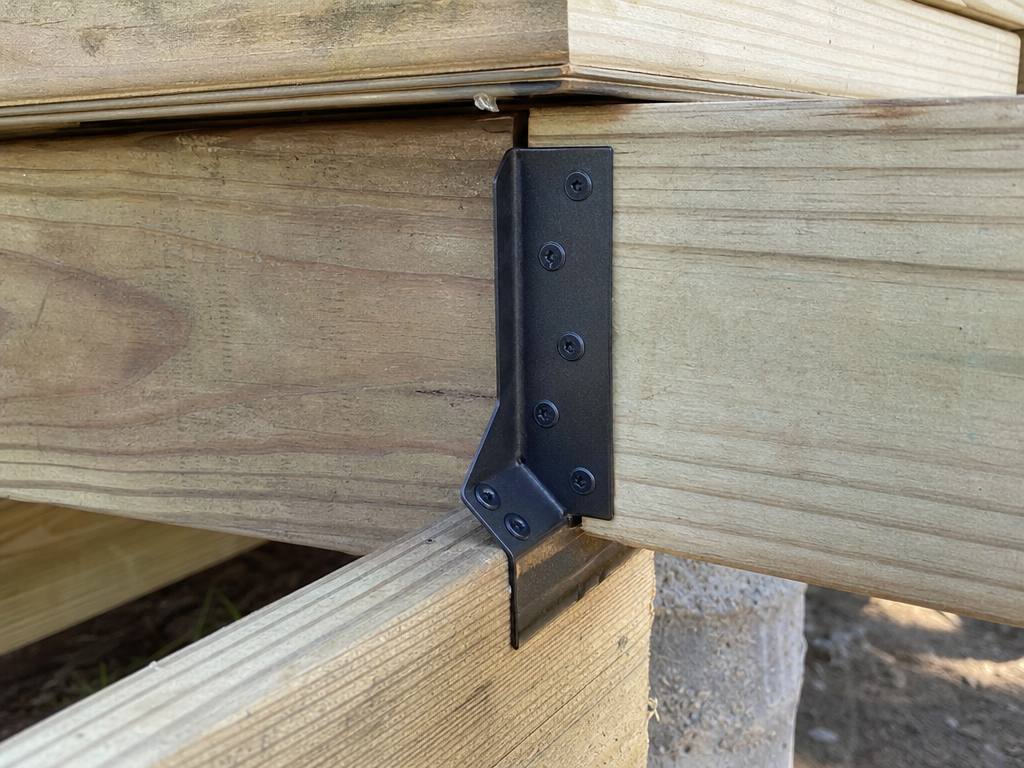
New joist hanger and coated fasteners on a repaired deck frame

What a Deck or Porch Repair Done Right Actually Involves

Anybody can screw a new board down over a soft spot. Doing it so it actually holds is the difference:

Finding the water or rot source first. A soft board is a symptom. If I don't find where water's getting in — a gap at the ledger, a low spot holding water, a post wicking moisture from the ground — the repair fails again in the same spot.

Cutting back to solid wood. I don't leave punky wood in the framing and hope it holds. If the rot runs further than expected, the repair gets bigger, because a repair that stops short just fails from the inside out.

Proper joist hangers and connectors. Framing gets tied together the way it's engineered to be, not just toe-nailed and hoped for.

Coated or stainless fasteners. The wrong screw in treated lumber corrodes and bleeds within a season. The right one doesn't.

Flashing the ledger. Every ledger repair gets flashed so water sheds away from the house instead of soaking into the connection point.

Treated lumber in every contact zone. Anywhere wood touches concrete, ground, or sits exposed to weather, it's rated for that exposure — so the load is actually carried the way it's supposed to be, not just patched to look finished.

Deck & Porch Repairs Done Wrong — And Why They Come Back

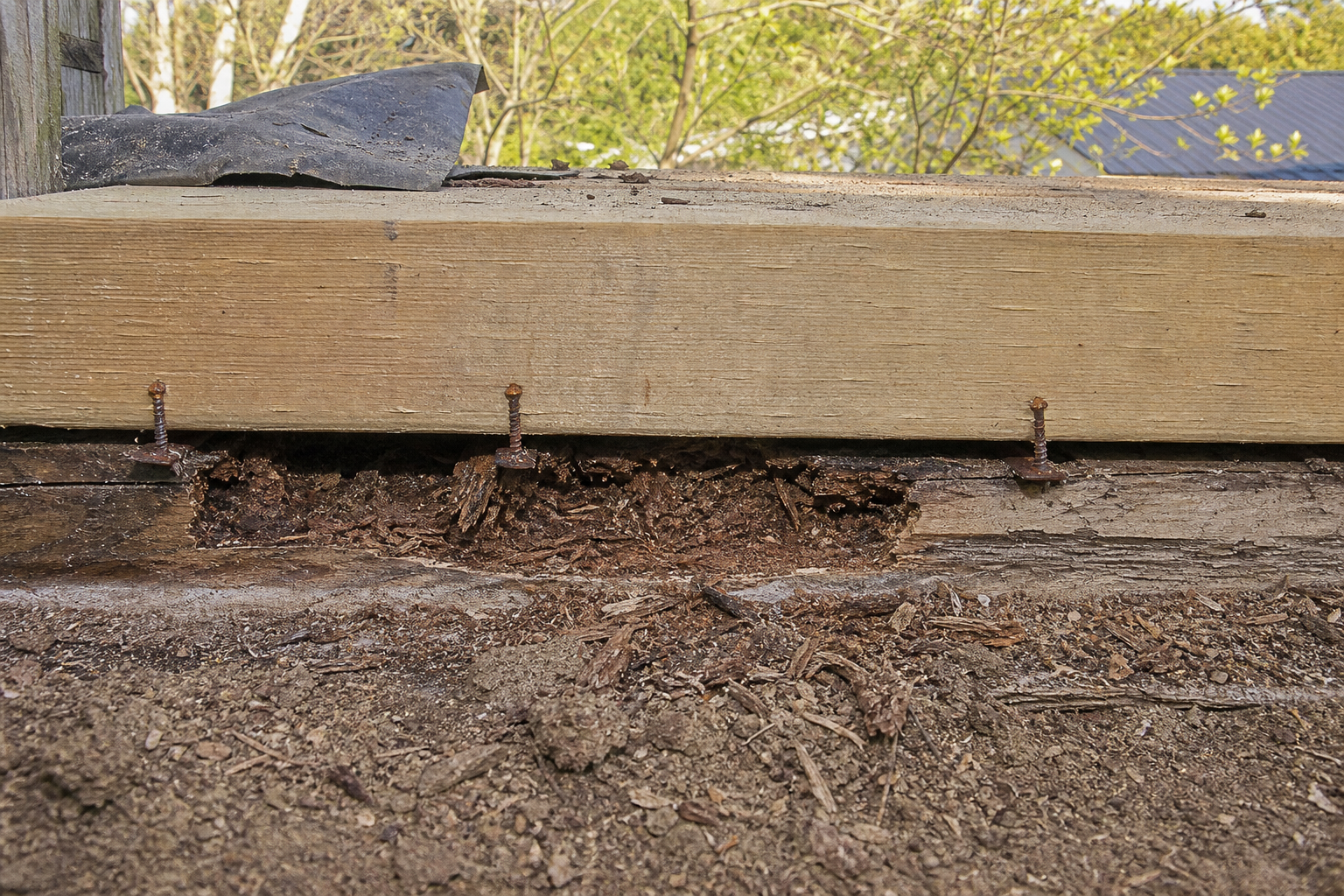
Most of the deck "repairs" I get called in to redo share the same handful of shortcuts. A new board screwed down over a rotted joist instead of replacing what's underneath, so the surface looks fine while the structure keeps failing. A ledger nailed instead of lagged and flashed, which is exactly the connection our rain is waiting to find. Uncoated fasteners that bleed rust and corrode loose within a year or two. A railing re-screwed into wood that's already gone punky, so it comes loose again the first time someone leans on it. Every one of those looks fine the day it's finished and is back to being a problem by the next wet season.

A rotted deck joist hidden under a new board with rusted fasteners
A new board screwed over a rotted joist hides the failure — the structure underneath keeps giving way.

How a Deck or Porch Job Goes With Me

1. You call and tell me what's going on. A photo of the soft spot or the railing helps me show up prepared instead of guessing.

2. I come look — and I check what's underneath, not just what you can see from the top. Deck problems almost always run deeper than the visible board.

3. You get the honest scope — a repair, a bigger job, or "this has crossed into a new build that needs a GC and a permit, and here's who I'd call." No upsell, no scare tactics.

4. We get it on the calendar. I'm a one-man shop, so I tell you straight when I can be there instead of promising tomorrow and not showing up.

5. I do it right and walk it with you. If a railing doesn't feel as solid as you expected, I would rather fix it on the spot than have you wonder about it later.

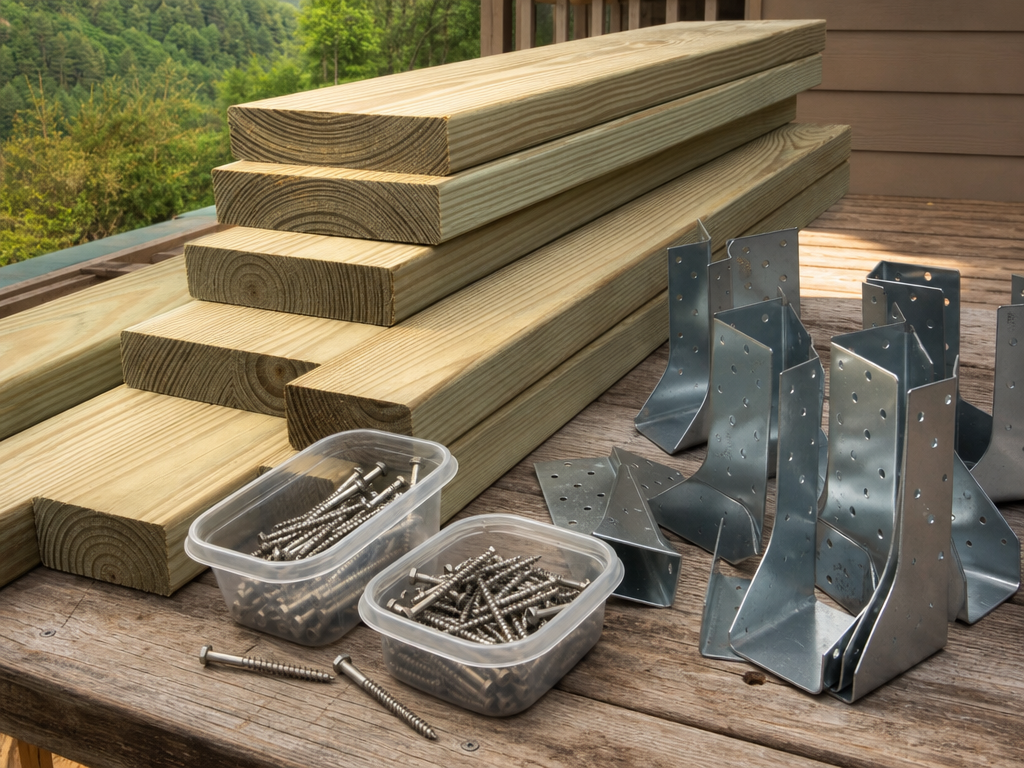
Treated lumber, joist hangers, and stainless fasteners on a workbench

Materials I Use

On a deck or porch, the material matters as much as the labor, because every piece is exposed to weather year-round. I use pressure-treated lumber in every contact zone — anywhere wood meets concrete, ground, or sits exposed to the weather — along with Simpson Strong-Tie joist hangers and structural connectors so the framing actually ties together the way it's engineered to.

Fasteners are hot-dipped galvanized or coated stainless, matched to treated lumber so they don't corrode and bleed within a season. For decking itself, some homeowners want to stay with wood and match what's there, and others want composite boards like Trex or TimberTech that hold up without the yearly maintenance — I'll talk through both and tell you honestly which fits your deck and your budget. And every ledger repair gets proper flashing, because that connection is where most deck failures start.

Frequently asked questions

How do I know if my deck is a safety issue?+

Soft or spongy boards, a railing that moves when you lean on it, and a ledger board pulling away from the house are the signs I take most seriously — that last one especially, because it means the deck's connection to the house is failing. If you're seeing any of that, don't wait on it. I can assess it on a visit and tell you straight whether it's a quick repair or something bigger.

Should I repair my deck or go for a full rebuild?+

If the damage is contained to a section, repair is almost always the right call. If the framing is widely gone or the ledger's failed, you're really looking at a new build that needs a permit — and I'll tell you that straight rather than patch something I'm not confident in.

Can you match my existing deck boards?+

Usually, yes, for wood decking. Older or weathered boards can be harder to match exactly, and I'll tell you honestly how close I can get before I start.

Do you work with composite decking?+

Yes. I install and repair composite decking like Trex and TimberTech alongside traditional wood, and I can talk through which makes more sense for your deck.

How soon can you get to a deck repair?+

Depends on the season and what's already on the calendar. I'm a one-man shop, so I'll tell you honestly when I can get there rather than promise tomorrow and not show up. If it's a safety issue, say so when you call and I'll do what I can to move it up.

Do you build new decks? Do I need a permit?+

Small new builds — call and ask, and I'll tell you if it fits my schedule and scope. Most new deck construction needs a permit and engineered plans, and for anything beyond a small build I'll point you to a licensed GC and an independent read on your estimates is worth having before you commit.

A bigger new build on the way?

Let's talk before you commit — have someone in your corner who's built these for 25 years.

See how A Contractor in Your Corner works

Serving the Tri-Cities & NC High Country

Get your deck or porch job on the calendar