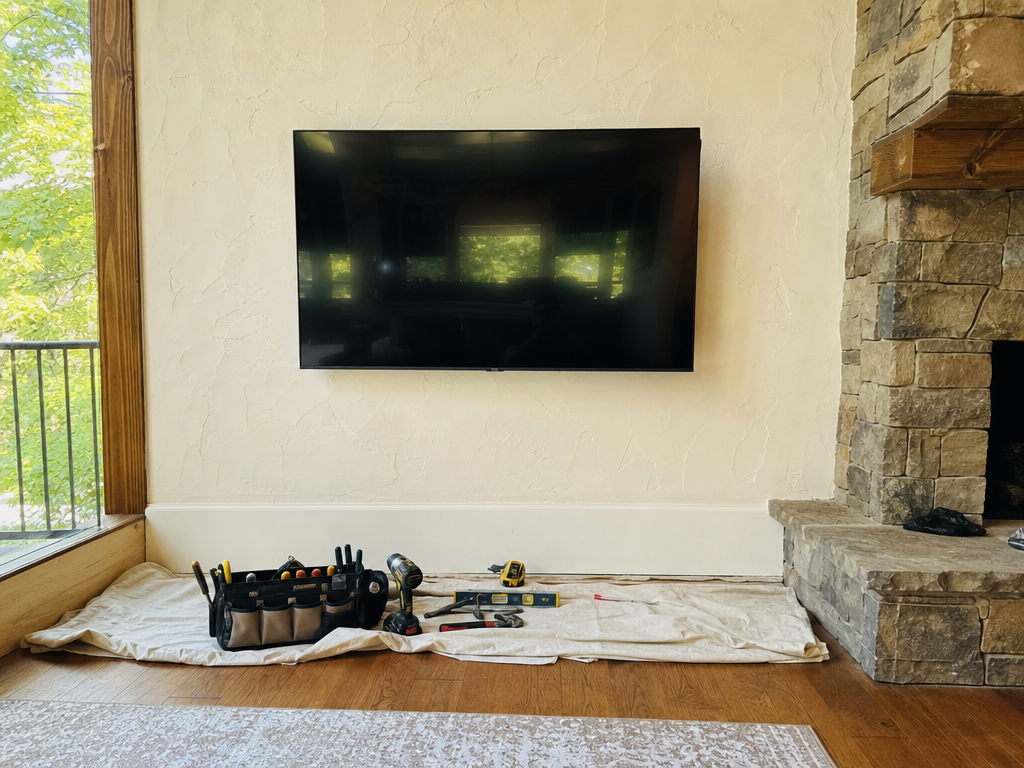
TVs, shelves, mirrors, art, curtain rods, blinds — mounted level, anchored into real structure, and hung to last.
Most calls are a straightforward flat-screen mount, but the details are what make it hold. I mount to drywall over studs, to brick, to stone, and over fireplaces where heat clearance and anchor choice both matter. Tilt mounts, full-motion mounts, and fixed mounts — whatever fits how you actually watch it.
A clean mount usually means hiding the cords, too. I handle outlet and device work behind the mount so there's no cord running down the wall in plain sight, and I mount soundbars at the same visit so the whole setup goes up together.
Floating shelves or a mantel near the TV — for a cable box, a game console, or just to finish the wall — are common add-ons; that's the floating shelves and mantels side of carpentry, and every mount or shelf gets proper anchoring and patching whether it's a new install or cleanup after an old one comes down. If you're setting up the whole wall, I can also put together the media consoles and stands that go under the screen in the same visit.
A lot of the older valley homes I work in have plaster-and-lath walls or framing that's not exactly on 16-inch centers, so finding real structure to bolt into takes more than running a stud finder across the drywall once. Up in the NC High Country, plenty of homes have stone or masonry fireplaces and log or timber walls, and none of those take a standard drywall mount — they need the right anchor for the material, not a one-size approach.
I also mount a fair number of TVs in second homes and rental properties getting turned over between seasons, where the job has to be done right the first time because nobody's checking back on it next week.
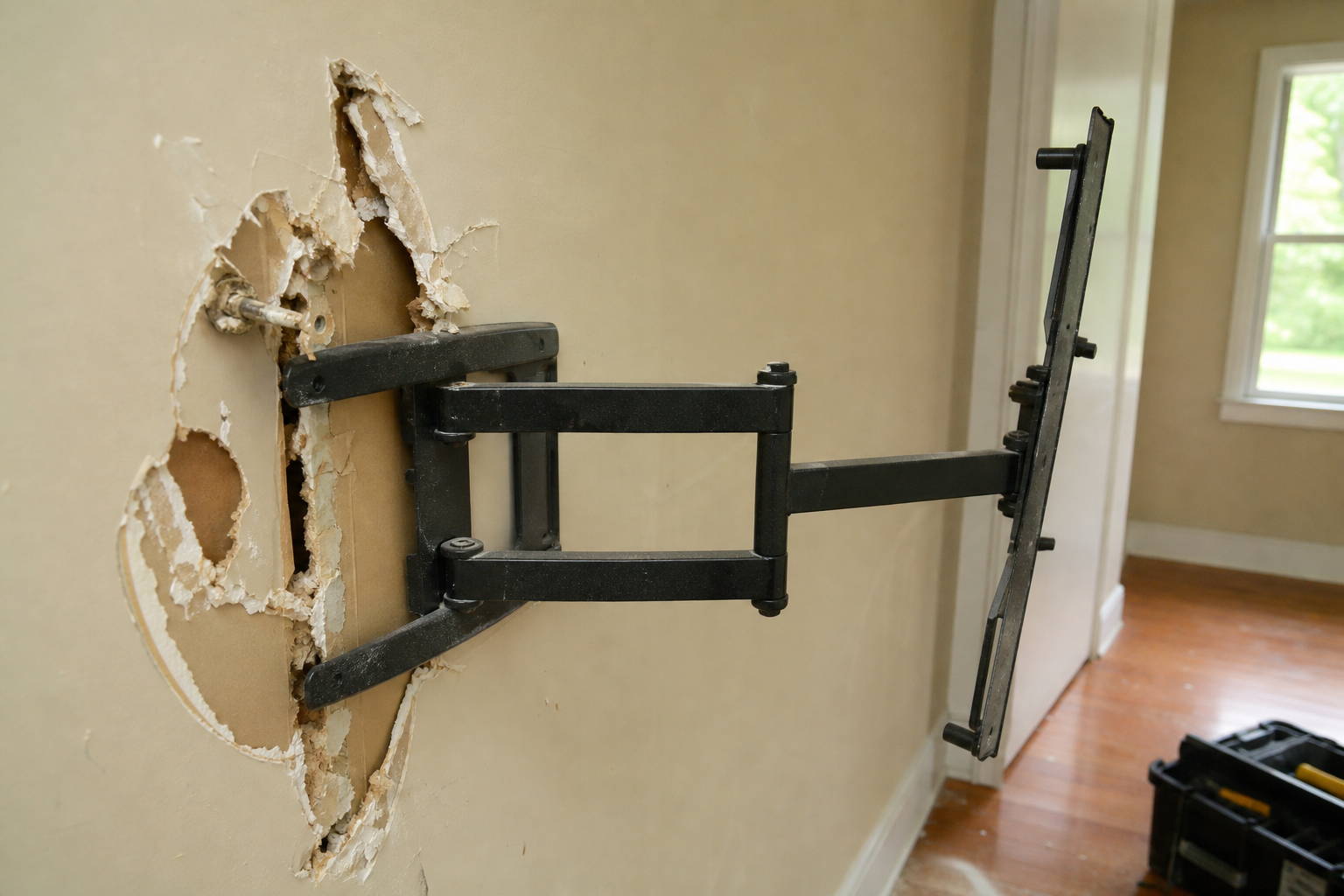
Most of the "it fell off the wall" calls I get trace back to the same handful of shortcuts: a heavy TV hung on plastic drywall anchors with no stud or backing behind it, a mount rated for a lighter set than what's actually on it, cords left dangling instead of routed and secured, or a TV set over a fireplace with no real thought given to heat clearance. Every one of those looks fine the day it goes up. None of them stay that way. If a bad mount points to a bigger question about the wall behind it, that's a good time to have someone in your corner giving you a straight answer before you spend more on it.
1. You tell me the TV size, the wall, and what's behind it. A photo of the wall and the mount (if you already bought one) helps me show up with the right hardware.
2. I find real structure. Studs where they line up, proper-rated anchors or masonry hardware where they don't — brick, stone, and log walls all take a different approach.
3. I mount it level, secure the cords, and clean up. If you want them hidden in the wall, that's outlet and cord work done in the same visit — not a separate contractor and a separate day.
4. You get a walkthrough before I leave, so you know it's solid, not just that it looks solid.
Can you mount a TV over my fireplace or on stone?+
Yes. Stone and masonry fireplace walls take different anchoring hardware than drywall, and mounting over a fireplace means accounting for heat clearance too. I'll tell you upfront if your setup needs a specific mount or bracket for it.
Will you hide the cords in the wall?+
Yes — in-wall cord concealment and outlet relocation behind the mount is common work and can usually be done the same visit as the mount itself.
Do you mount to brick?+
Yes. Brick and masonry need the right drill bits and anchors, not drywall hardware, and I bring what the wall actually calls for.
How big a TV can you hang?+
Size isn't the limit — weight and wall structure are. Tell me the TV's weight and the mount's rating (or I'll help you pick one) and I'll make sure what's behind the wall can actually carry it.
Do you supply the mount, or do I buy it?+
Either way works. I can pick up a mount that matches your TV and wall, or I'll install one you've already bought — I'll just check the rating before it goes up.
Before you hire your next contractor, have someone in your corner who's built these for 25 years.
Get an independent read on your estimates