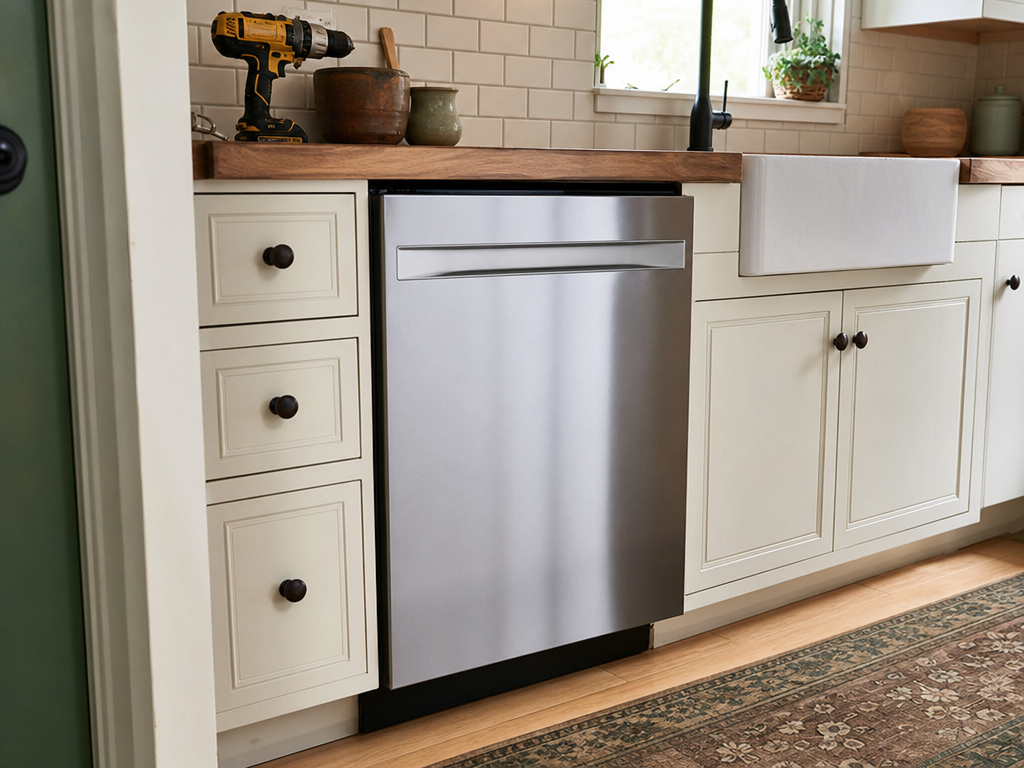
Dishwasher, garbage disposal, over-range microwave — installed with the water line, power, and venting done right, not just plugged in and hoped for.
If it hooks up to water, drain, power, or a vent that's already there, it's mine to install. That covers dishwashers and garbage disposals, over-range microwaves and range hoods, electric ranges and wall ovens on an existing circuit, washer and dryer hookups, and a refrigerator's water line for the icemaker or dispenser.
A lot of these jobs overlap other trades I already do. On a dishwasher or disposal I'm running the same water-line and shutoff work as a fixture swap, and on a microwave or disposal that needs its own switch I'm doing the same power hookup work as any device changeout. If the new appliance is part of a bigger kitchen update, I'd rather handle both in the same visit than send you looking for a second contractor.
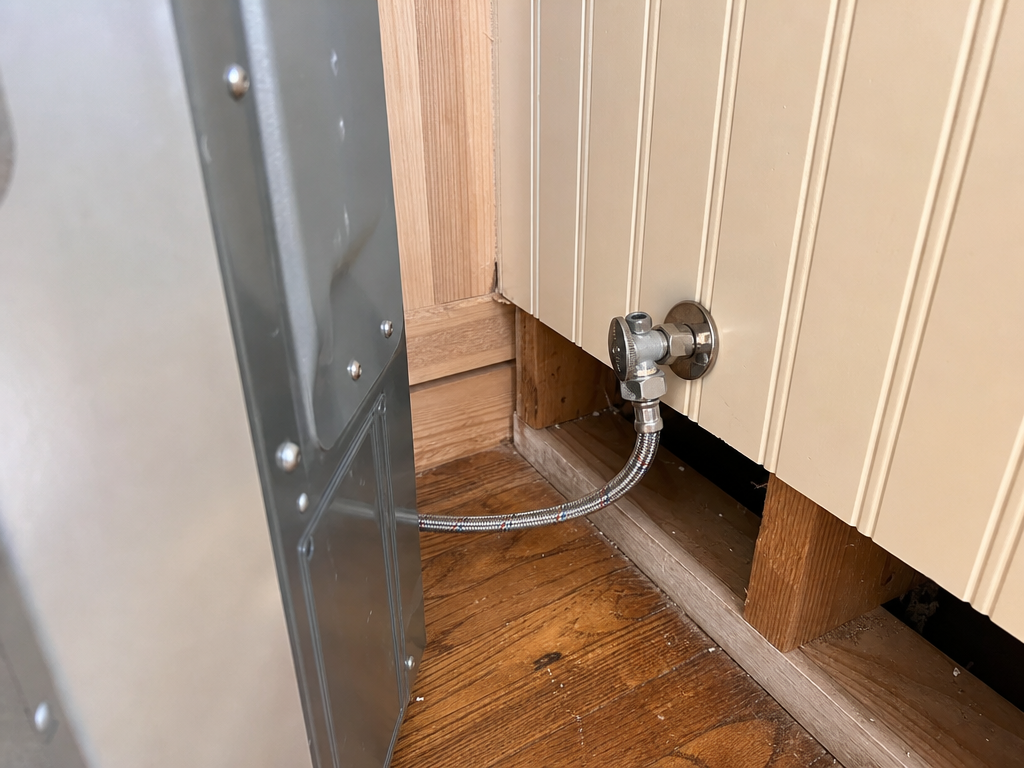
A good share of my appliance calls are second homes and rentals turning an appliance over between guests or seasons, from the valley towns up into the High Country cabins around Boone and Banner Elk. Older homes in the region often bring a second wrinkle — cabinet openings that aren't quite standard size anymore, and shutoffs or outlets behind the old unit that haven't been touched in decades and need attention before the new one goes in.
Winter adds one more thing worth knowing: a fridge or washer water line running along an exterior wall is a real freeze risk once the cold sets in, especially in a place that sits empty for a stretch. Worth a look while I'm already back there.
I check that the new unit actually fits the opening before it's halfway in. I replace a tired old shutoff or a cracked hose while I'm back there instead of reconnecting it to the new appliance. I level it, secure anti-tip brackets on a range, and get the venting right on a hood or dryer instead of just aiming it at the wall. Then I run it under load before I leave, so we both know it works — not just that it turned on. And if a job crosses into gas or needs a new dedicated circuit, I'll tell you that up front and point you to a licensed plumber or electrician rather than stretch past what I should be doing.
1. You call and tell me what you're installing — new or a swap, and roughly where it's going.
2. I confirm what's already there — the existing water, drain, power, or vent it'll connect to — so I show up with the right parts.
3. I install it, test it under load, and clean up before I call it done.
4. If anything's outside my lane — gas, a new circuit — I say so before you're stuck mid-job with the old one disconnected. That's the same honesty behind having someone in your corner who tells you what a job actually needs.
Can you install a dishwasher or disposal I already bought?+
Yes — that's most of what I do here. Bring the unit, and I'll handle the water line, drain, and power hookup to what's already in the cabinet.
Do you install gas ranges or gas appliances?+
No. Gas hookups go to a licensed plumber — I'll tell you that straight rather than take on something I shouldn't.
Do you haul away the old appliance?+
Ask when you call — I'll tell you what's included for your job.
My hookup is old — can you still install a new appliance there?+
Usually, yes. Old shutoffs, hoses, and outlets are common on a swap, and I'll replace what needs it as part of the install rather than reconnect a new unit to a worn part.
How far out are you booking appliance installs?+
Call and I'll give you a straight answer for that week — I'm a one-man shop, so I tell you when I can actually be there instead of promising tomorrow.
Before you hire your next contractor, have someone in your corner who's built these for 25 years.
Get an independent read on your estimates