Cracked, warped, or missing siding panels, plus small new siding work — repaired to blend in, not stick out.
I handle the repairs and small jobs — the work that's too small for a re-side crew to bother with and too important to leave alone:
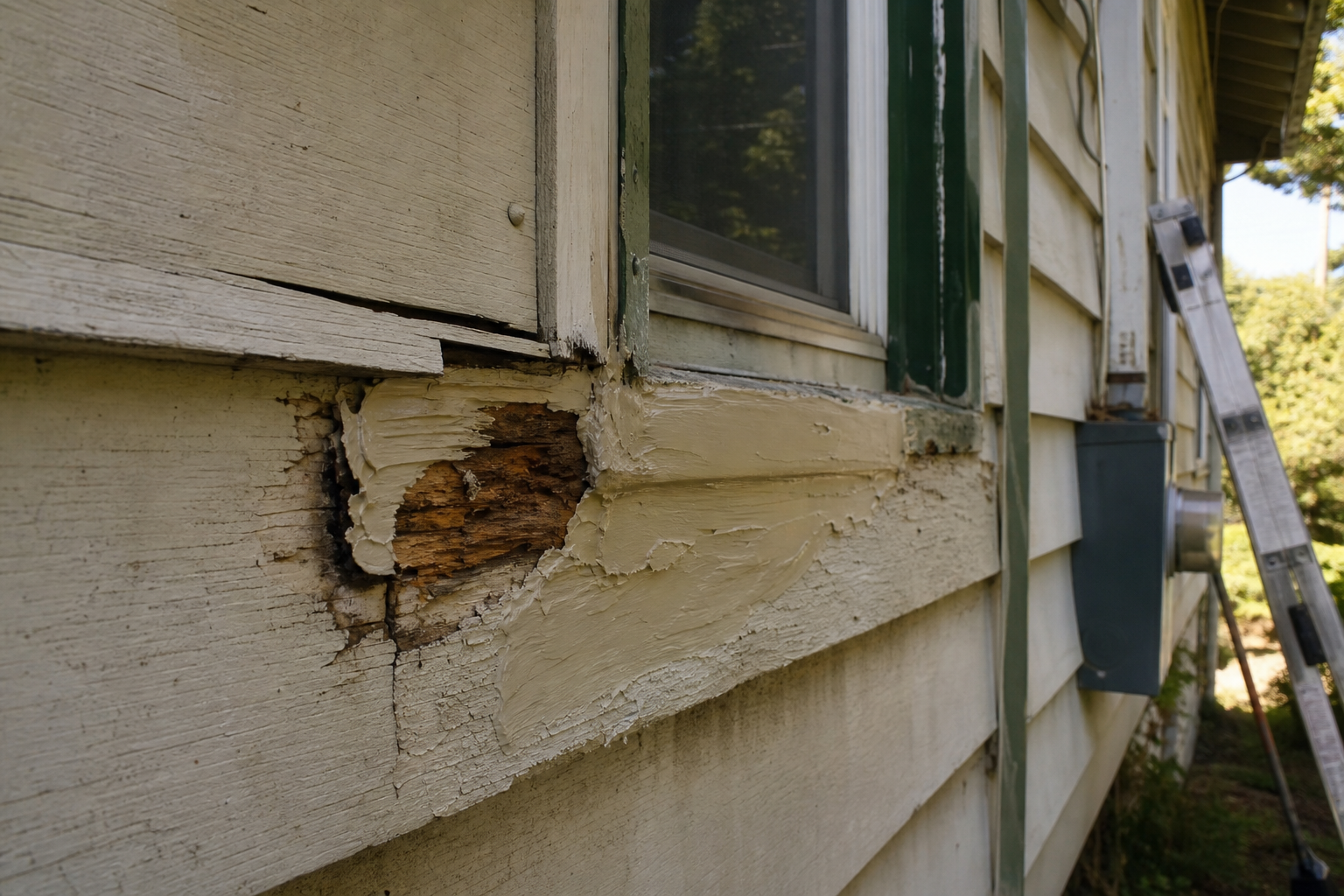
Rotted and damaged board replacement. Pulling the bad sections and putting in new that matches. The rot usually runs deeper than what you can see, so this often overlaps with the wood underneath once the siding's off.
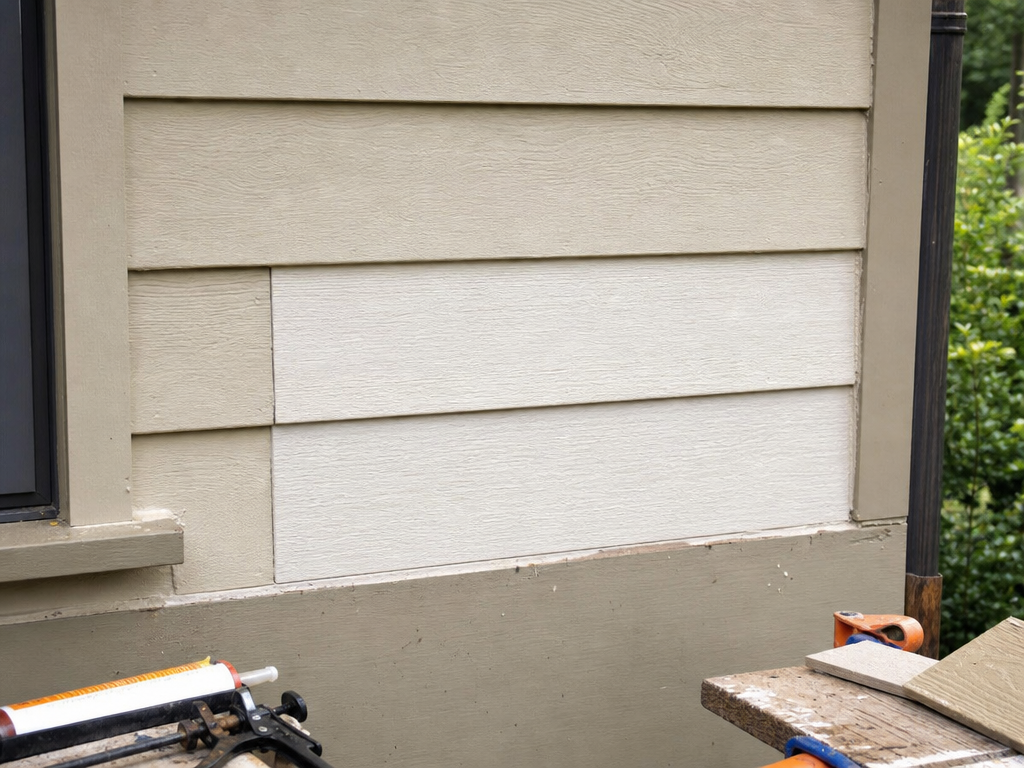
Matching and blending existing siding. The hard part on any repair — getting the profile, color, and texture close enough that the fix disappears into the wall.
Repairs around windows, doors, and penetrations. Where most siding fails first. This ties into the trim and flashing where siding meets an opening.
Storm, wind, and impact damage. A single beat-up elevation after a Tri-Cities thunderstorm, or boards ripped loose in high wind.
Small new siding runs. An addition, a repaired wall section, a shed or outbuilding.
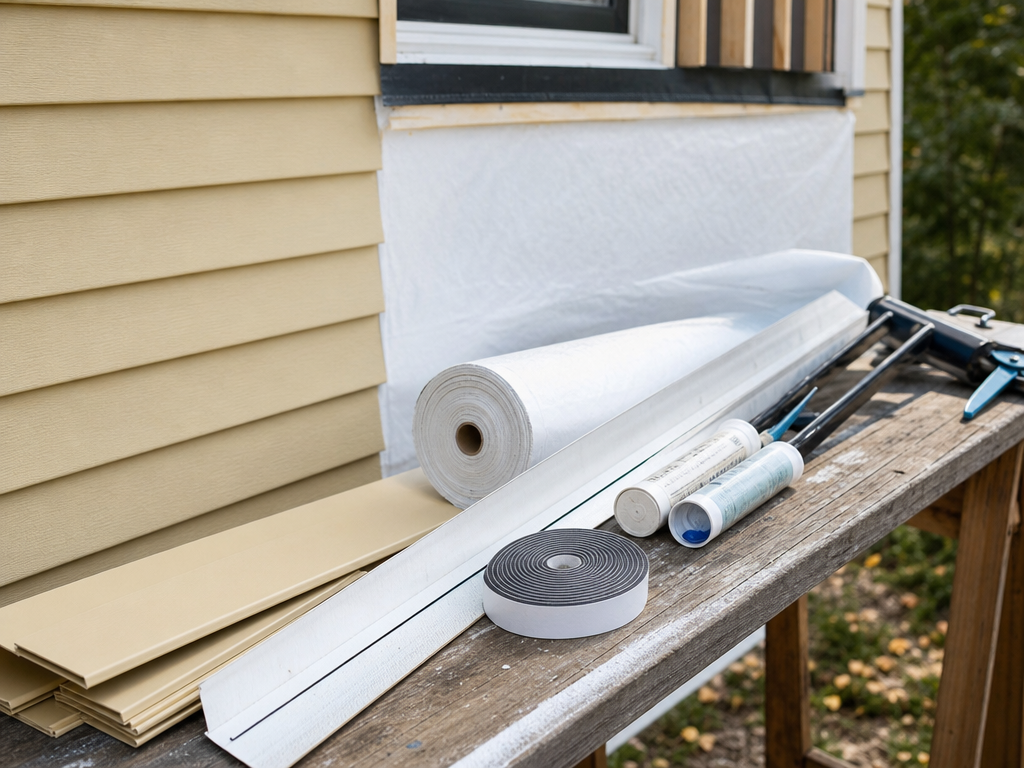
Sealing and flashing. Closing the gaps that let water and pests behind the wall — really a weatherproofing and sealing job as much as a siding one.
A lot of what I get called for looks the same across Elizabethton, Johnson City, and Kingsport, because the housing stock is a similar age:
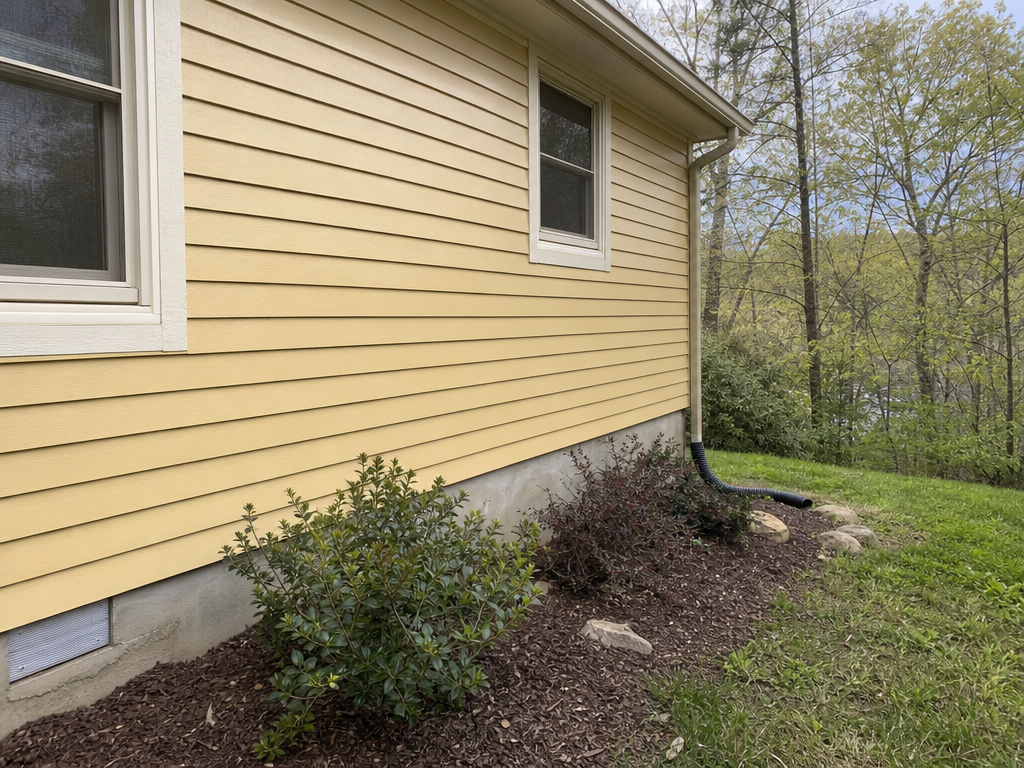
Soft, rotted siding behind a gutter downspout or a spot where the gutter's been overflowing — fix the siding, but the water's usually a gutter problem first. One elevation — usually the south or west wall — that's chalked, cracked, and weather-beaten while the rest of the house looks fine. Boards pulled loose or buckled after a windstorm, letting the wall breathe when it shouldn't. Gaps and open seams around trim and corners where water's been getting in behind the siding for years before anyone noticed. Woodpecker holes, impact dings, and the odd section a ladder or mower kicked up.
None of these need a whole new wall of siding. They need someone who'll fix the actual problem and match the repair.
Siding here works harder than it does in a lot of the country. We get real freeze-thaw swings — water gets into a hairline crack, freezes, and pries it wider every winter night. Wind-driven rain pushes moisture up under laps and behind trim. And on the mountain — Boone, Blowing Rock, Banner Elk — the weather's rougher still, and a lot of those homes are cabins and second homes that sit empty for weeks, so damage hides and spreads before an owner ever sees it.
Older homes down in the valley have their own issue: decades of paint and patch jobs layered over siding that was never flashed right to begin with. That's why a repair that isn't done properly comes right back — you're fixing the symptom, not the water. Sometimes the wall just needs a good wash and inspection before anyone can even see what's going on, which is where a pressure wash and prep comes first.
Here's the honest version, because it saves you money: if the damage is contained — a few boards, one section, a bad spot around a window — repair is almost always the right call, and it's a fraction of a re-side. If more than about a third of a wall is failing, or the same problems keep showing up all over the house, you're throwing good money after bad patching it, and it's time for a siding contractor and a real re-side.
I'll walk it with you and tell you which one you're actually looking at. If it's a repair, it's mine. If it's a re-side, that's outside what a handyman should be doing, and I'll hand you a siding contractor I'd trust on my own house — that's the whole point of having someone in your corner who isn't trying to sell you the big job.
Anybody can nail a board up. Doing it so it lasts and disappears is the difference:
Finding where the water's actually coming from — and fixing that first, or the new siding rots too.
Checking the wood behind it. If the sheathing or framing's gone soft, that's structural wood repair before any siding goes back on. I'm not going to hide rot behind a fresh board.
Matching the profile and color as close as the material allows, and blending the repair into the surrounding wall.
Proper moisture barrier and flashing — house-wrap and flashing that sends water back out, not a bead of caulk hoping to hold.
Sealing it up right once it's in, so the repair edge doesn't become the next leak — the weatherproofing step that actually keeps it dry.
Most of the "repairs" I get called to redo have the same handful of shortcuts: caulk smeared over rot instead of replacing it, so the wood keeps rotting under a cosmetic skin. Mismatched boards that make the fix stand out worse than the damage did. No flashing behind the new piece, so water walks right back in. Paint slapped over damp or damaged siding to hide it for a showing. Every one of those looks fine for a season and fails by the next winter. I'd rather do it once.
1. You call and tell me roughly what's going on — a photo or two helps.
2. I come look — figure out the real cause, not just the visible damage, and check the wood behind it.
3. I give you the honest scope — repair, a bigger job, or "this one's a re-side, here's who to call."
4. We get it on the calendar — I'm a one-man shop, so I tell you straight when I can be there.
5. I do it right and walk it with you — and if something's not sitting the way you pictured, I'd rather change it than have you tell a neighbor otherwise.
I use name-brand siding and trim that actually match what's on the market — not whatever's cheapest on the shelf — plus quality house-wrap, flashing, and sealants that are rated for our weather.
On a repair, the material matters as much as the labor: the right board and the right sealant are what make the fix outlast the rest of the wall instead of failing first.
Can you match my existing siding?+
Matching is the part I take the most care with — profile and color, blended into the surrounding wall so the repair disappears. Older or discontinued siding is harder, and I'll be straight with you about how close I can get before I start.
Do you replace whole walls of siding or just repairs?+
Repairs and small new runs. A full re-side is a siding contractor's job, and I'll point you to one I trust rather than take a job that's over a handyman's line.
There's rot — is it just the siding or something worse?+
Often the siding is the symptom and the water source — a gutter, bad flashing, a leak — is the cause. I check the wood behind it and fix the actual problem, so you're not repairing the same spot next year.
How soon can you get to it?+
I'm one person, so it depends on what's ahead of you — but I'll tell you a real timeline, not a maybe.
Do you handle the painting after?+
I don't paint, but I know good painters and I'll point you to one.
What if water's getting in behind the siding?+
Then it's as much a sealing and flashing job as a siding one, and that's exactly the kind of thing worth fixing before it reaches the framing.
Before you hire your next contractor, have someone in your corner who's built these for 25 years.
Get an independent read on your estimates