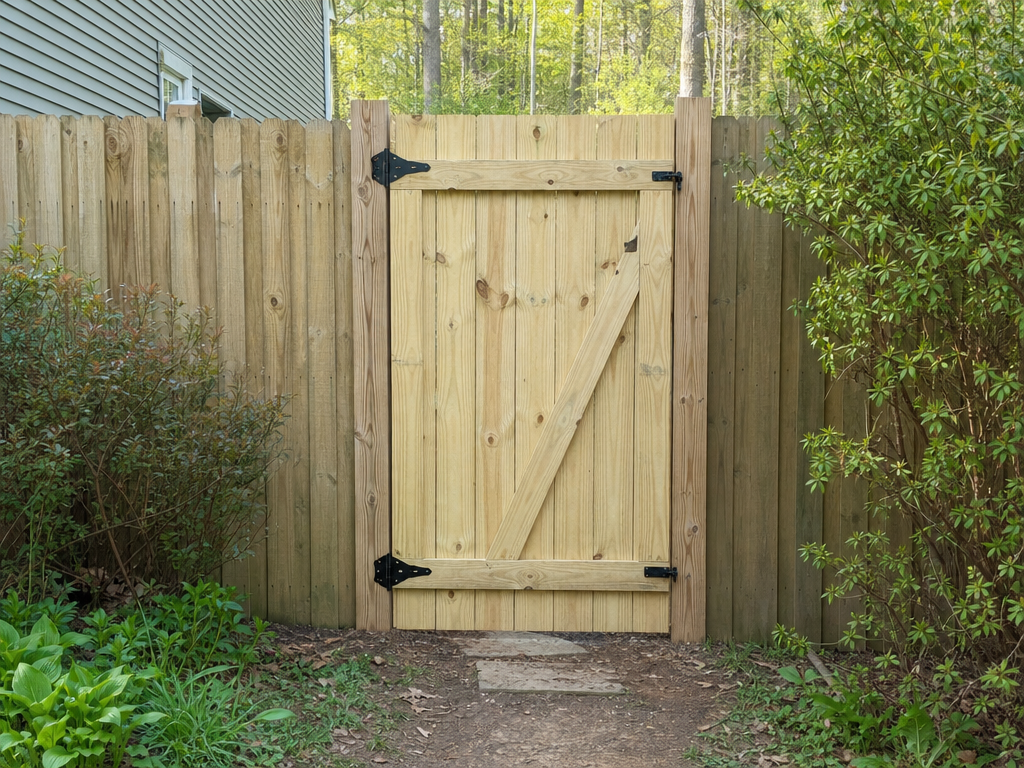
Loose pickets, a sagging gate, a post that's shifted — fence and gate repair keeps a yard secure and looking cared for.
Most fence and gate calls come down to a handful of jobs, over and over:
Sagging gates re-hung so they swing free and actually latch, not just propped up for another season.
Rotted post replacement — pulling a post that's gone soft at the base and setting a new one right, which usually means solving whatever's been feeding water to it. That's the same wood-and-water problem I run into on deck and porch repair.
Picket, board, and panel replacement to match what's already standing.
Leaning fence sections reset plumb instead of left to lean further.
Hinge and latch hardware swapped for something that'll actually hold up outside.
Resetting posts in concrete when the old footing has cracked or heaved — this overlaps with the post and structural repair I do on decks and porches too.
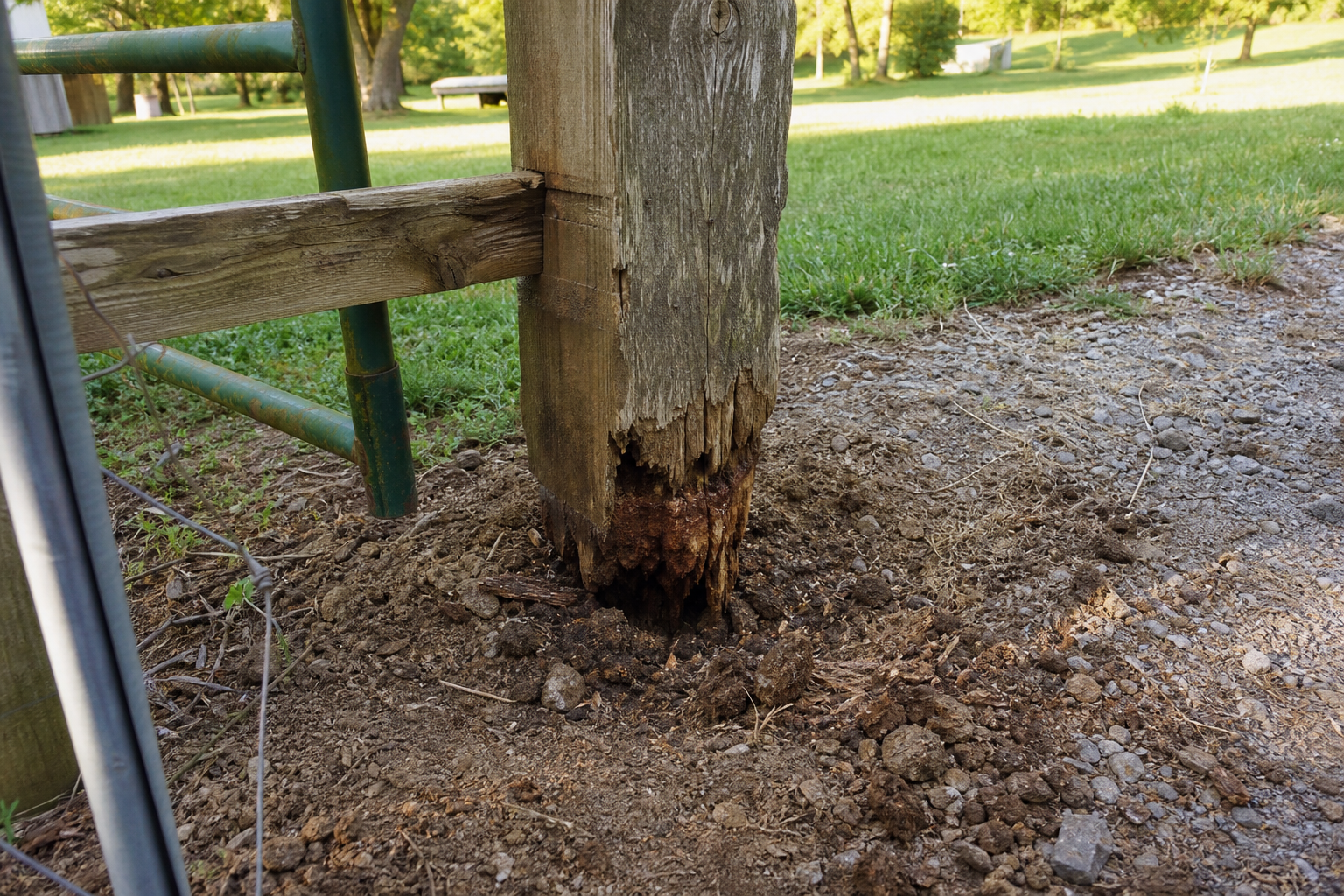
A fence lives outside in the weather every day, and around here that weather is hard on wood. We get better than 45 inches of rain a year in the valley, and a post set shallow or without proper concrete gets pushed and heaved by freeze-thaw cycles all winter — water works into the ground around the base, freezes, expands, and loosens the post a little more each time.
Rot itself usually starts right where the post meets the ground, since that's where wood stays wettest longest in our humid climate. Add in wind that racks a fence already weakened at the base, and a small lean turns into a real problem fast. Up in the NC High Country, steeper slopes and harder freeze cycles push posts around even more, so fences up there tend to need this kind of reset work sooner than you'd expect.
A lot of "fixed" fences I get called to are really just delayed. A leaning post braced with a stake instead of reset — it leans again the next time the ground moves. A new picket screwed straight to a rotted rail that can't hold a nail much longer. Hardware bolted into wood that's gone punky around the screw. A gate shimmed level instead of re-hung square, so it drags again in a month. None of that is a repair — it's a way to make the problem quiet for a little while.
Before I touch a fence for cleaning or a fresh coat of stain, I'll usually recommend we clean the fence first so any finish actually sticks — and if the job overlaps with other work on the outside of the house, fence repair pairs naturally with other exterior repairs done in the same visit.
1. You call and describe the problem. A photo of the gate or the leaning section helps me show up with the right materials.
2. I check the posts, not just the symptom. A sagging gate almost always traces back to a post, so that's where I look first.
3. You get an honest scope — a hinge adjustment, a post reset, or a bigger repair, explained plainly before I start. If you're weighing a fence job against other estimates, that's exactly what having a contractor in your corner is for.
4. I do the work and make sure the gate swings and latches before I call it done.
Can you fix my sagging gate?+
Yes — a sagging gate is almost always a post or hinge problem, and both are standard repair work for me.
Do you replace just the bad posts, or does the whole fence have to come out?+
Usually just the bad posts. If the rest of the fence is sound, replacing or resetting the rotted or leaning posts is a fraction of the cost of tearing the whole thing out.
Can you match my existing fence?+
Most of the time, yes, for common picket and board styles. Bring a photo or a sample board and I'll tell you honestly how close I can match it before I start.
Do you build whole new fences?+
Small runs and repairs are exactly what I do. A full new fence installation across a large property is a bigger job than a one-man shop should take on — if that's what you need, I'll tell you straight and point you toward it.
How soon can you get to a fence or gate repair?+
I'm a one-man shop, so I'll tell you honestly where you fall on the calendar rather than promise tomorrow and not show up. Call and I'll give you a real timeframe.
Before you hire your next contractor, have someone in your corner who's built these for 25 years.
Get an independent read on your estimates