Faucets, sinks, toilets — I replace fixtures clean and leak-free. Beyond a fixture swap, that's a licensed plumber's job, and I'll tell you so.
Fixture replacement is one of the most common calls I get, and after 25 years it's become a specialty inside the broader handyman work — most of it lands as part of kitchen and bath repair work, where fixtures live. Here's what that covers:
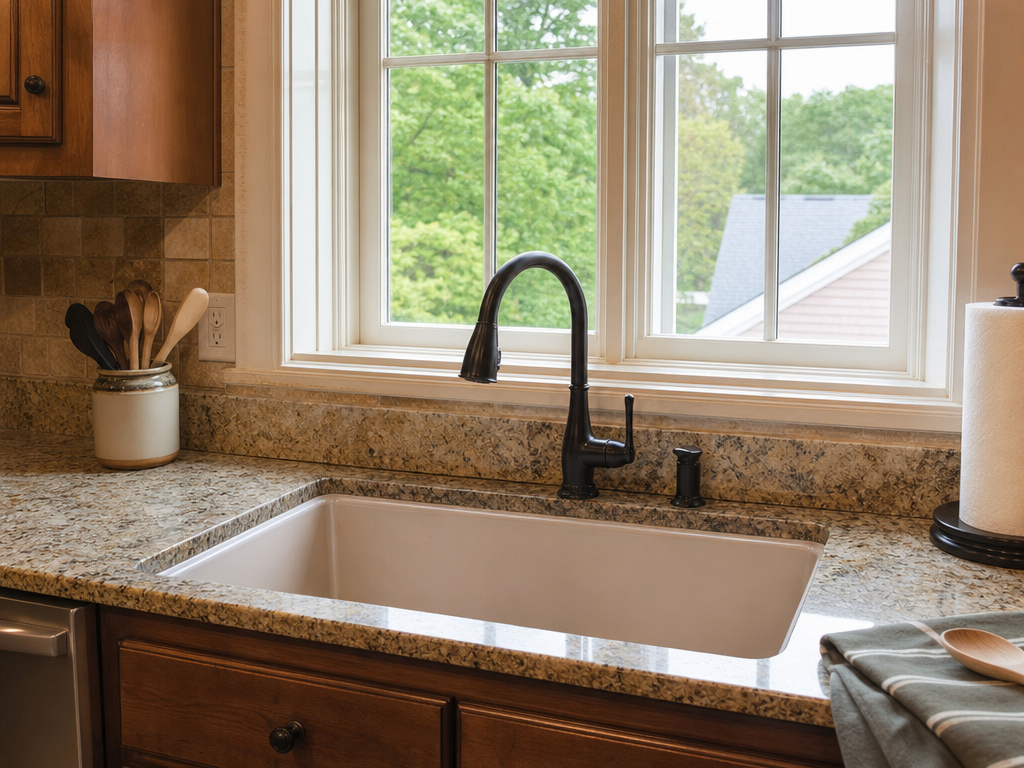
Faucets. Kitchen and bathroom faucets, pulled and replaced with a new one — yours or one I help you pick.
Sinks. Kitchen sinks, bathroom sinks, vanity sinks — dropped in clean, hooked back up, sealed.
Toilets. A full toilet swap, wax ring and all, done so it sits solid and doesn't rock or seep.
Garbage disposals. Old unit out, new one in, wired and plumbed back to the sink.
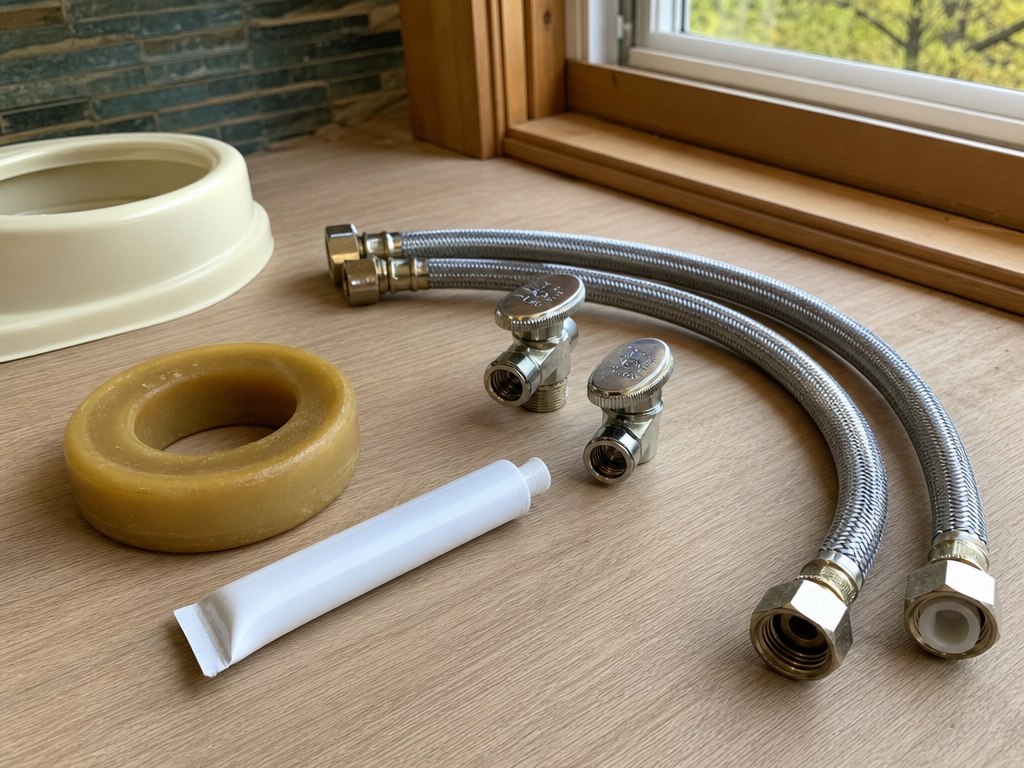
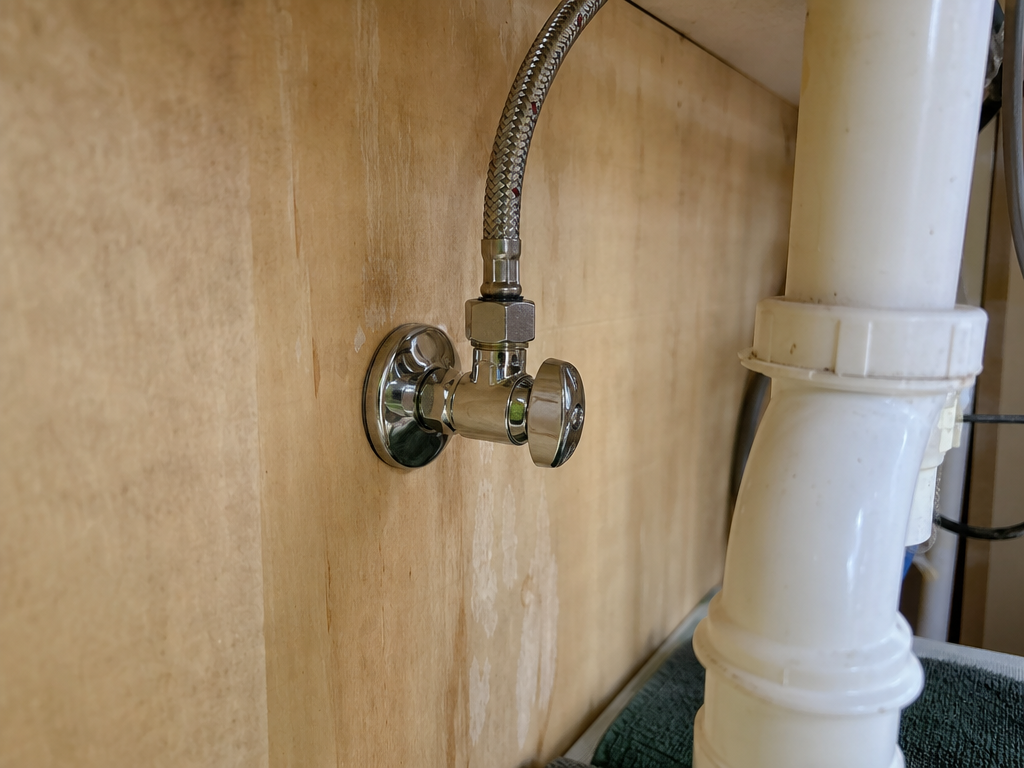
Supply lines & shutoff valves. The braided lines and the little valves under every sink and toilet — small parts that fail constantly and are worth replacing while a fixture's already apart.
Showerheads & tub spouts. Straightforward swaps that make an old shower feel new — and a natural time to add bathroom safety bars while I'm already working the tub and shower.
Hose bibs. Exterior spigots, especially the ones that froze and split over the winter.
Dishwasher hookups. The water-line side of a dishwasher swap, which I handle alongside dishwasher and disposal hookups when the whole appliance is going in.
Most of what I get called for looks familiar, whether the house is in Elizabethton, Johnson City, or Kingsport — a lot of the housing stock is a similar age, and fixtures wear out on a similar timeline:
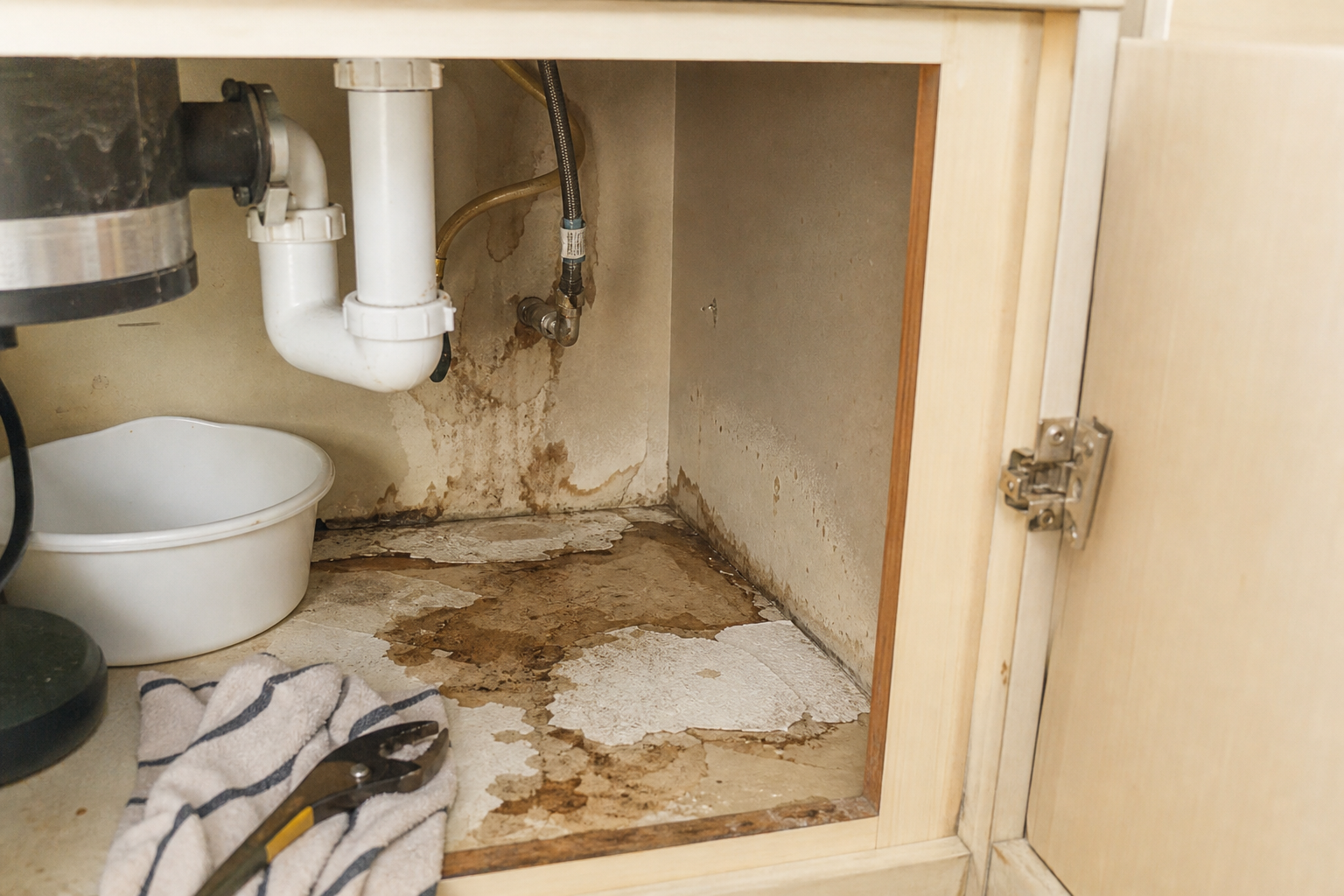
A kitchen faucet that drips no matter how tight you turn the handle, because the cartridge inside is worn past the point of a fix. A toilet that runs constantly or rocks when you sit on it — usually a sign the wax ring or the flange underneath has given out. A shutoff valve under a sink or behind a toilet that's corroded shut, so a simple faucet swap turns into a fight just to get the water off. A garbage disposal that hums, trips the breaker, or has just quit outright. A hose bib on the outside wall that froze last winter and split, so it drips or sprays the second you turn it on in spring.
None of these are complicated jobs on their own. They're just the kind of small, nagging problems that pile up in an older house until you finally decide to deal with all of them at once.
Fixture hardware takes more of a beating here than people expect. A lot of the valley's housing stock is several decades old, and the shutoff valves and supply lines under sinks and toilets were installed once and never touched again — they corrode and seize up over the years until a routine faucet swap means fighting a valve that won't turn before you can even start the job.
Winter adds its own damage. Freeze-thaw cycles split hose bibs on the outside wall and can freeze a line running along an uninsulated exterior wall, and a fixture that was already leaking slowly just gets worse once the pipe behind it has been through a hard freeze.
Up in the NC High Country — Boone, Banner Elk, Blowing Rock — it's a sharper version of the same problem. Those towns sit at 3,000 to 4,000 feet with single-digit cold, and a lot of the homes up there are cabins and second homes that stand empty for weeks at a stretch. An unwinterized line or a slow fixture leak can sit unnoticed the whole time, quietly doing real damage before anyone's back to catch it.
Here's the honest line, because it matters for what you're paying for and who shows up. I am not a plumber. What I do is fixture replacement — swapping an existing faucet, sink, toilet, disposal, shutoff, supply line, showerhead, or hose bib for a new one, like for like. If you can point at it and say "replace that," it's almost always mine.
What I don't do — and won't pretend to — is anything that touches the plumbing system itself: re-piping, a leak behind the wall or under the slab, water heaters, gas lines, main or sewer lines, or moving a drain to a new location. That's a licensed plumber's work, and if a job I'm looking at crosses into that territory, I'll tell you plainly instead of taking the money and hoping it goes fine. That's the same reason I built a contractor in your corner into how I work — you deserve someone who tells you when a job isn't mine to do.
Swapping a fixture looks simple from the outside. Doing it so it doesn't leak in six months is where the actual work is:
Shut off and test before anything comes apart. Confirming the water's actually off, not just assumed off, before I start disconnecting anything.
Replace the shutoff and supply lines while I'm in there. If the old valve is corroded or the supply line is original to the house, it gets replaced along with the fixture — putting a new faucet on a failing shutoff just sets up the next leak.
Proper seals, every time. A new wax ring on every toilet set, fresh silicone where a fixture meets the counter or the floor — no reusing old seals to save five minutes.
Don't overtighten and crack a fitting. Plastic and brass fittings crack under too much torque. I snug them to spec, not to muscle.
Check for leaks under load. I run the water, check every connection under real pressure, and don't call the job done until nothing's dripping.
Seal it up so it doesn't leak behind the wall. Once the fixture's set, I finish with a clean bead of silicone or caulk at every edge — the same sealing work that keeps water out from behind a wall or cabinet — so water can't work its way in where you'd never see it until the damage is done.
Most of the fixture callbacks I see trace back to the same handful of shortcuts. A shiny new faucet plumbed onto old, crusty shutoffs that fail within the month because nobody replaced them while they were already apart. A supply line connection cranked down too hard that cracks the fitting and drips slowly into the cabinet below. A toilet set without a fresh wax ring, because the old one "still looked fine," that seeps at the base and rots the subfloor underneath before anyone notices. No leak check under real water pressure, so a loose connection isn't caught until it's already done damage. Silicone skipped around the base of a sink or a tub spout, so water gets behind the fixture instead of running off it. Every one of these looks finished the day the job wraps and starts causing problems within weeks.
1. You call and tell me what's failing. A photo of the fixture and the space underneath helps me bring the right parts the first time.
2. I look at the whole picture, not just the fixture. The shutoffs, the supply lines, the seal underneath — if something else down there is on its way out, I'll tell you before we start.
3. You get an honest scope — a straight fixture swap, or "this one's a plumber's job," with a name to call. No pretending I can do something I can't.
4. We get it on the calendar. I'm a one-man shop, so I tell you straight when I can be there instead of promising tomorrow and not showing up.
5. I test it under water before I leave. Every connection gets checked under real pressure, and I don't consider the job done until nothing's dripping.
Fixture work lives or dies on the small parts nobody sees once the job's done. I use braided stainless supply lines instead of the cheap vinyl ones that harden and crack over time, and quarter-turn shutoff valves that won't seize up the way old multi-turn valves do after a decade of sitting unused.
Every toilet gets a quality wax ring or wax-free seal, and every fixture edge gets finished with 100% silicone — not the cheap acrylic caulk that shrinks and cracks within a season. For the fixtures themselves, I work with name brands like Moen, Delta, and Kohler as examples of hardware built to match what's already in your home and actually last, rather than the cheapest option on the shelf.
Can you install a faucet or toilet I already bought?+
Yes — installing a fixture you've already purchased is common. Bring the model or a photo when you call so I know what I'm working with, and I'll flag it if the shutoffs or supply lines underneath need replacing too.
My shutoff valve won't turn — can you still do the job?+
Usually, yes. A seized shutoff is one of the most common problems I run into on a fixture swap, and replacing the valve along with the fixture is standard work. If the water can't be isolated at all without going further into the system, I'll tell you and point you to a plumber.
Do you fix leaks inside the wall or under the floor?+
No. Anything behind the wall or under a slab is outside fixture replacement and goes to a licensed plumber. I'll say so up front rather than open a wall I'm not equipped to repipe.
Can you replace a garbage disposal?+
Yes — disposal replacement is standard fixture work, including reconnecting it to the sink drain and, when needed, the dishwasher line.
Do you install or repair water heaters?+
No. Water heaters are outside fixture replacement and go to a licensed plumber — I'll tell you straight if that's what you're looking at.
How long does a typical fixture swap take?+
Most single fixtures — a faucet, a toilet, a disposal — are a half-day job or less. If the shutoffs and supply lines need replacing too, or you're doing several fixtures in one visit, I'll give you a realistic window when I see the scope.
Before you hire your next contractor, have someone in your corner who's built these for 25 years.
Get an independent read on your estimates