LVP and laminate install, tile and plank repair, squeaky floors, subfloor work — flooring is where carpentry and finish work meet, and it's a job I take seriously.
Flooring is where carpentry and finish work meet, and after 25 years I've done most of what comes with it. These are the jobs I get called for most:
Subfloor repair. Soft, spongy, or water-damaged subfloor gets cut out and replaced before anything new goes down. A squeaky floor is almost always a subfloor problem, not a surface one — loose fasteners, a gap that's opened up, or a joist that's shifted — and I handle subfloor, trim, and transition carpentry as part of the same visit, not a separate call.
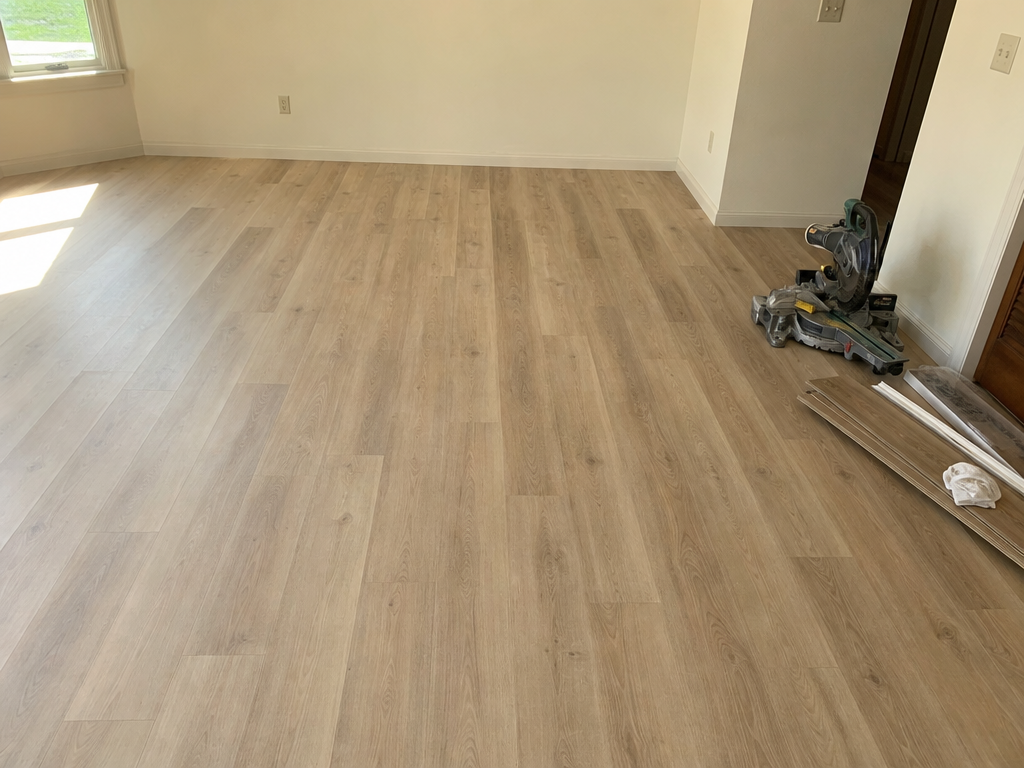
Luxury vinyl plank, laminate, and hardwood install. New floors in a room, a hallway, or a whole level, laid so they sit flat and stay flat.
Tile repair. Cracked or loose tile in a kitchen or bath is common flooring work. I do tile repair in kitchens and baths as an extension of general flooring repair, matching grout and pattern where I can.
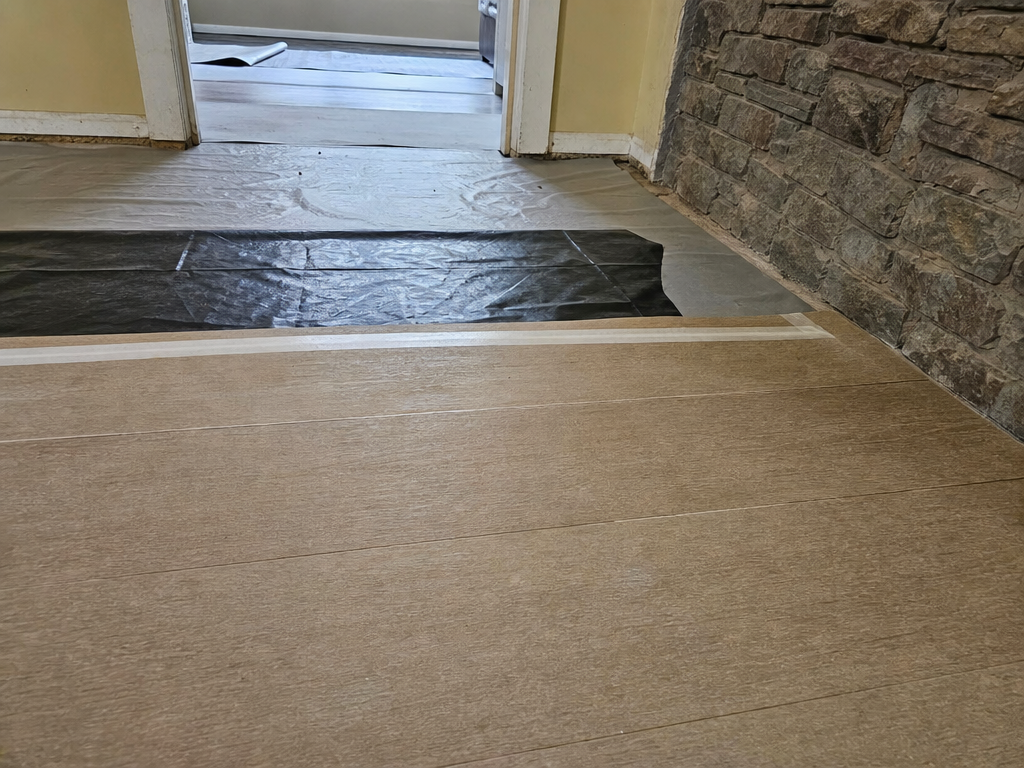
Transitions and thresholds. The strip between rooms or flooring types where a lot of floors look unfinished — done clean so it doesn't catch a toe or a mop.
Squeak and soft-spot fixes. Often fixable from above or below without tearing up the whole floor.
Water-damaged floor cutouts. Cutting out and replacing just the damaged section rather than the whole floor, when that's the honest call.
A lot of what I get called for looks the same from Elizabethton to Johnson City to Kingsport, because the housing stock is a similar age and flooring takes the same kind of abuse everywhere:
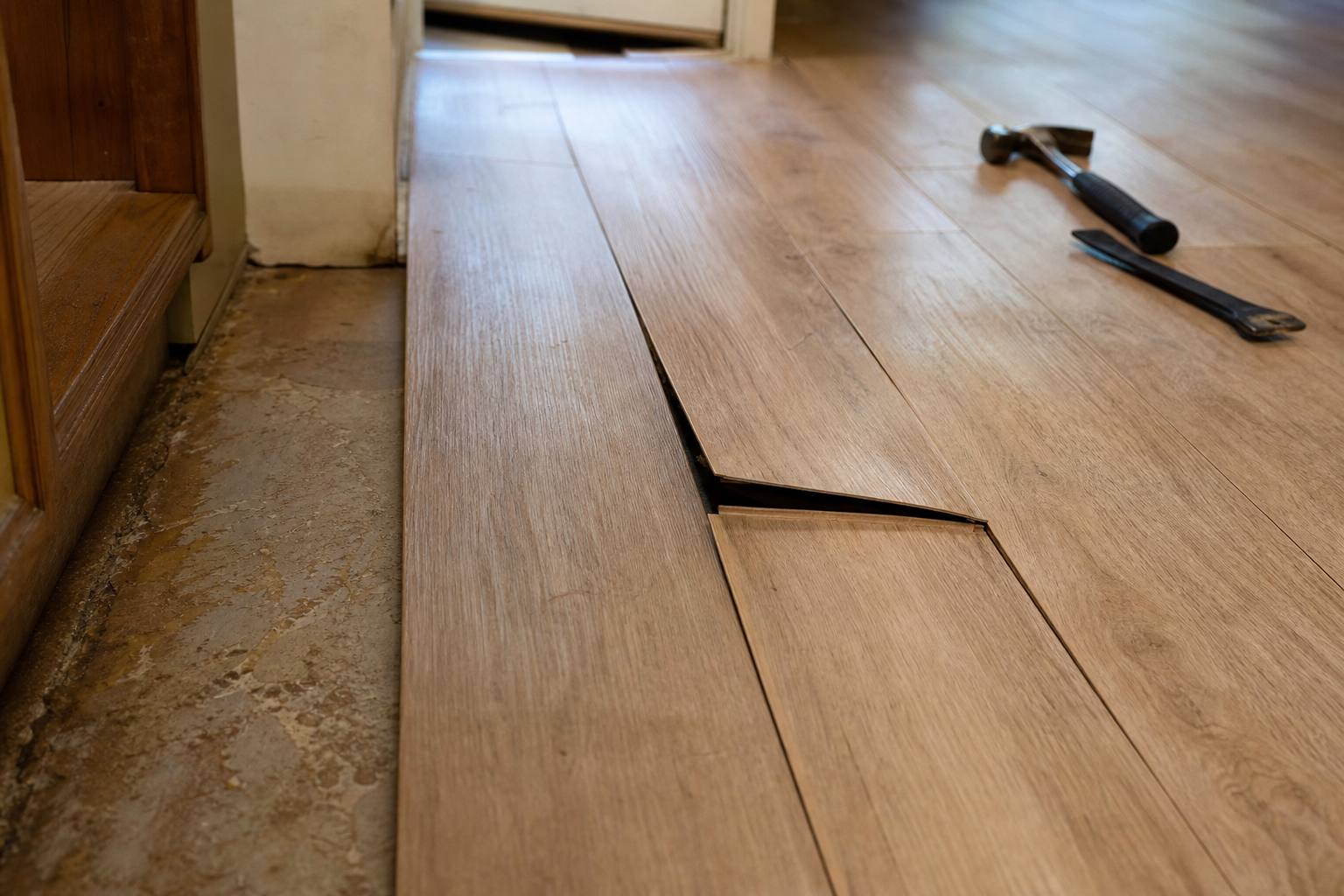
A soft or spongy spot near a tub, toilet, or kitchen sink, where a slow leak has been feeding the subfloor underneath for longer than anyone realized. Squeaks that show up out of nowhere in a floor that's shifted slightly over the years, usually where a fastener has backed out or a joist has moved. Cupped or gapped hardwood boards that were never acclimated right before install, or that have just lived through one too many humid summers. Cracked or loose tile where the grout has failed or the base underneath was never quite level. An uneven transition between rooms where two different floors meet and one sits proud of the other. None of it is unusual, and none of it means the whole floor has to come out — but ignoring it usually means it spreads.
When the damage runs down into the wall — new baseboard needed, or a nick behind the old baseboard where it came up — I coordinate baseboard and wall patching so the finish looks intentional, top to bottom, instead of handing you off to a second contractor for a small patch.
Wood flooring takes a beating from the climate here that it wouldn't in a drier region. Down in the valley — Elizabethton, Johnson City, Kingsport — we're humid subtropical, better than 45 inches of rain a year, with big seasonal humidity swings between a wet summer and a dry winter heating season. Wood floors expand and contract with that swing. If a floor wasn't acclimated to the house before install, or wasn't gapped right at the walls to allow for that movement, it cups, buckles, or gaps open as the seasons turn — and once it starts, it keeps doing it every year.
Slow leaks are the other half of the problem. A supply line under a kitchen sink or a wax ring gone bad under a toilet can feed water into a subfloor for months before it shows on the surface, quietly rotting the wood underneath long before you see a soft spot. Add in older regional homes that have settled over the decades, and you get uneven, squeaky floors that were level once and aren't anymore.
Up in the NC High Country — Boone, Banner Elk, Blowing Rock — it's a different set of problems on the same theme. Those towns sit at 3,000 to 4,000 feet, with bigger moisture and temperature swings than the valley sees, and a lot of those homes are cabins and second homes that stand empty for long stretches. A leak that starts while nobody's there has all the time in the world to spread under the floor before anyone catches it.
Here's the honest version, because it's your money. If the problem is contained to a section, a soft spot, or a single room, repairing or replacing just that area is almost always the right call and a fraction of the cost of redoing the whole floor. That's the kind of work I handle directly.
Where I'll tell you to look elsewhere is whole-house hardwood refinishing — sanding and refinishing an entire floor is a specialist's job with equipment and dust control I don't run, and you're better served by someone who does that full-time. And if what looks like a flooring problem turns out to be widespread structural subfloor or joist failure across a room or a level, that may need a licensed general contractor to scope it properly. Some of that is still mine to fix. Some of it crosses a line, and when it does I'll say so rather than take the job anyway. That's the whole idea behind having an honest second opinion in your corner before you sign anything.
Anybody can lay a plank over a subfloor. Doing it so it lies flat and lasts is the whole difference:
Fixing the water and the subfloor first. If there's a leak or a soft spot, that gets solved before a single piece of flooring goes down — never covered over and hoped for.
Leveling and prepping the base. A flooring job is only as flat and solid as what it sits on. Low spots get filled, high spots get sanded, and loose subfloor gets fastened down tight.
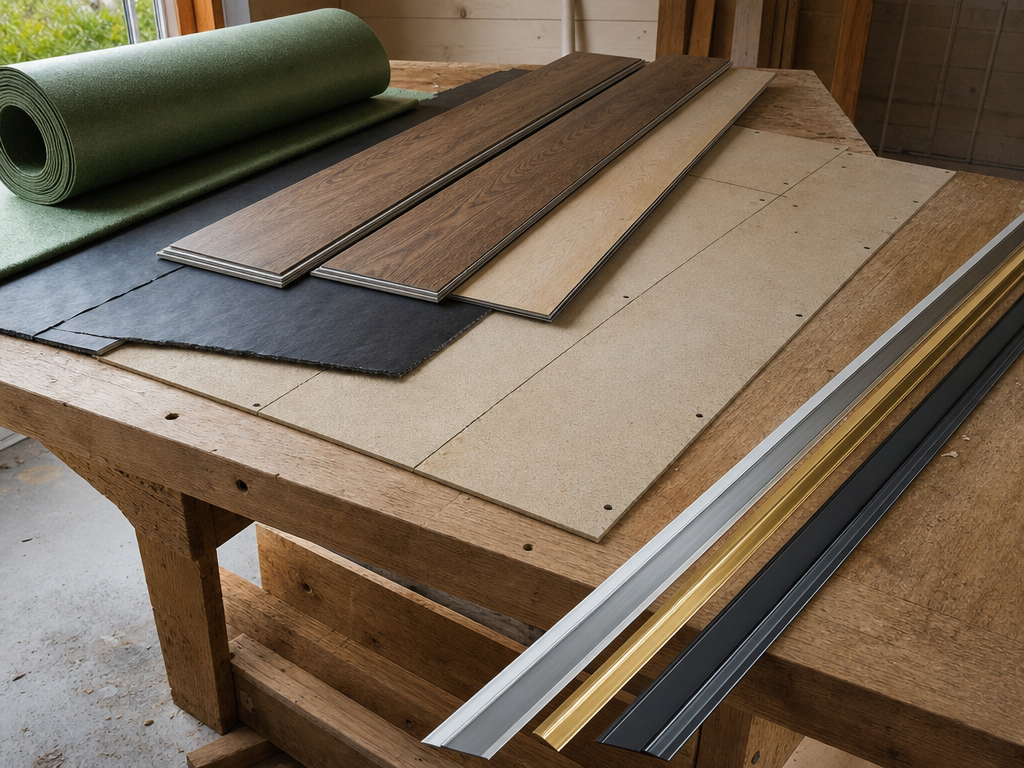
Moisture barrier and the right underlayment. Especially over concrete or in a below-grade room, skipping this step is exactly where floors fail early.
Acclimating wood before it goes down. Real hardwood and some laminates need time in the room to adjust to the humidity before install, or they move after the fact.
Leaving the right expansion gap. Every wood and laminate floor needs room to move at the walls. Skip it and the floor buckles the first humid summer.
Clean transitions. Where one floor meets another, the transition gets set flush and secure — not just caulked and hoped for.
Most of the flooring "repairs" I get called in to redo share the same handful of shortcuts. New flooring laid straight over a soft or wet subfloor because pulling it up and fixing the real problem takes longer. Wood or laminate installed with no expansion gap, so it buckles or pops apart the first humid summer. Tile set over a base that isn't level or that still flexes underfoot, so the grout cracks and tiles work loose within a year. Underlayment skipped to save an hour, so every step through the room reads through the finished floor. Every one of those looks fine on install day and is back within a season.
1. You call and tell me roughly what's going on. A photo or two of the floor and the room helps me show up prepared.
2. I come look — and I check what's underneath, not just what you see on the surface. A soft spot or a squeak almost always starts below the flooring, not on it.
3. You get the honest scope — a repair, a full room, or "this needs a specialist or a GC, and here's who I'd call." No upsell, no scare tactics.
4. We get it on the calendar. I'm a one-man shop, so I tell you straight when I can be there instead of promising tomorrow and not showing up.
5. I do it right and walk it with you. If a transition or a seam isn't sitting the way you pictured, I would rather fix it on the spot than have you tell a neighbor otherwise.
On a flooring job, what's underneath the finished surface matters as much as what you can see. I use proper underlayment and moisture barrier under every install, not a corner cut to save an afternoon. In wet or below-grade areas — bathrooms, basements, mudrooms — luxury vinyl plank (LVP) is usually the right call over wood or laminate, because it handles moisture that would ruin either one. Under tile, I use cement backer board rather than laying tile straight over a subfloor that can flex and crack the grout.
For the flooring itself, I work with name-brand LVP and laminate lines — products like Shaw and COREtec are common examples — chosen to match the room and the traffic it'll take, not whatever's cheapest that week. And every transition gets a quality transition strip, not a bead of caulk trying to do a strip's job.
What does a soft spot in my floor actually mean?+
It almost always means the subfloor underneath has been compromised, usually by a slow water leak. The finish flooring is just riding on top of the problem. It needs to be opened up, the cause found and fixed, and the subfloor repaired before new flooring goes back down.
Can you match my existing floor?+
Often, yes, especially with common LVP and laminate lines that stay in production for years. Older or discontinued flooring is harder to match exactly. Bring a sample or a photo and I'll tell you honestly how close I can get before I start.
Do you refinish hardwood floors?+
No — whole-house hardwood sanding and refinishing is a specialist's job with equipment and dust control I don't run. I'll point you to someone I'd trust with my own floors. I do handle hardwood repair, board replacement, and new hardwood install.
LVP, laminate, or tile for a bathroom or mudroom?+
For a wet room, LVP is usually my recommendation — it handles standing water and humidity better than laminate, and it's less labor and cost than tile. Tile still has its place, especially if that's the look you want, but it needs a properly prepped, level, non-flexing base or the grout fails.
Can you fix a squeaky floor without tearing it up?+
Often, yes — many squeaks can be fixed from above or below without a full floor replacement, once I find where the fastener or the framing has moved.
How long does a flooring job take?+
A single room repair or small install is often a day or two. Subfloor damage, multiple rooms, or a full install take longer, and acclimation time for wood adds days before I even start. I'll give you a realistic timeline on the walkthrough, not an optimistic one.
Before you hire your next contractor, have someone in your corner who's built these for 25 years.
Get an independent read on your estimates