Twenty years running J.CO Renovations built a name around kitchens and baths. I still do the small jobs and repairs — tile, minor plumbing, cabinet work — to that same standard, and I'll tell you honestly the moment a job has grown past what a handyman should touch.
Twenty years running a renovation company built a name around kitchens and baths, and the repair side of that work is still what I do most. These are the calls I get most often:
Faucets, sinks, and toilets. A dripping faucet, a cracked sink, a toilet that runs all night — I'll swap out the faucet, sink, or toilet without you needing a separate plumber call for a straightforward fixture replacement.
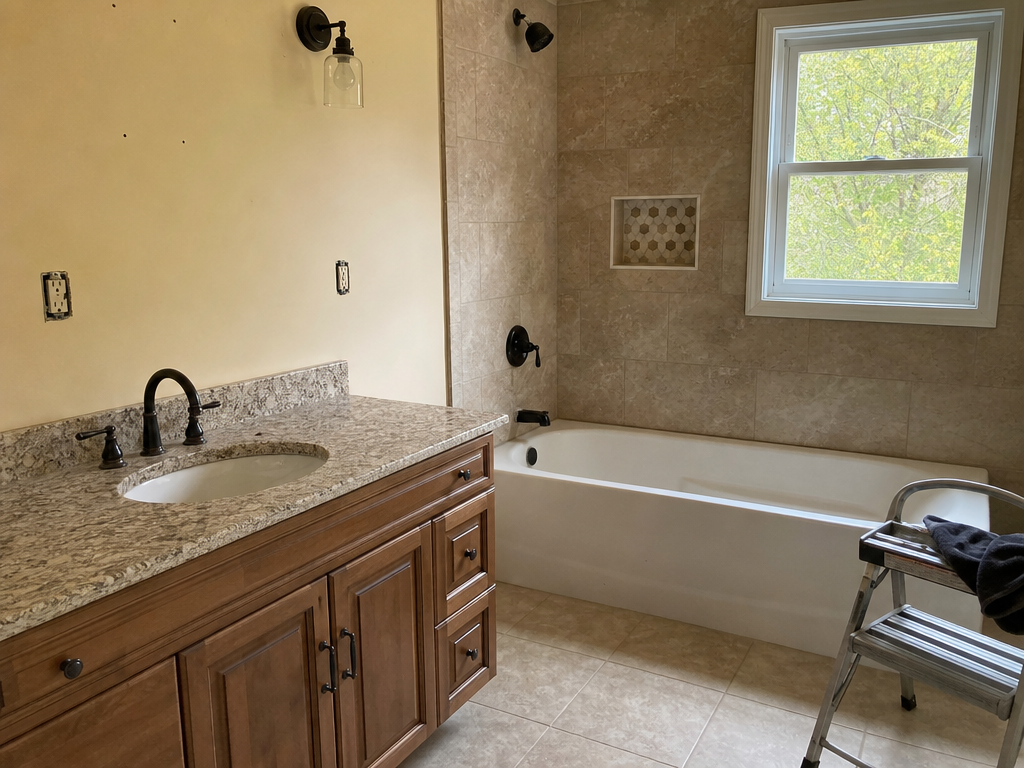
Vanity remove-and-replace. Pulling a dated vanity and setting a new one — leveling it, sealing it to the floor and wall, and reconnecting the supply lines and drain so nothing weeps behind the cabinet later.
Tile and floor repair. Cracked or loose tile, a grout line that's failed, a floor that needs patching where an old fixture came out — that's tile and floor repair work I take on in kitchens and baths alike.
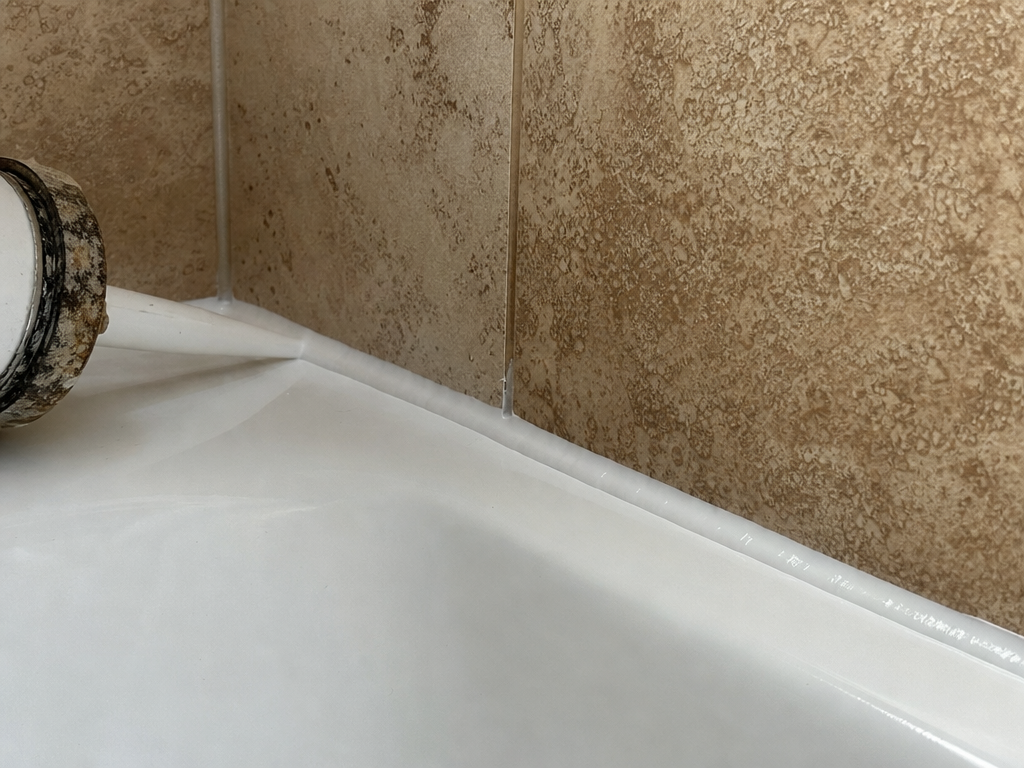
Tub and shower re-caulk. A tub or shower starting to show black mildew at the seams usually just needs the old caulk cut out and redone right. I'll re-caulk the tub and shower as part of a bath visit.
Cabinet and hardware. Doors that won't close right, loose hinges, pulls and knobs, small cabinet builds — cabinet and trim carpentry that keeps a kitchen or vanity functioning instead of looking tired.
Vanity lighting and exhaust fans. Outdated vanity lighting, a switch that's seen better days, or a bathroom fan that's stopped pulling moisture out — I handle vanity lighting and switch changeouts as fixture work, often in the same visit as everything else.
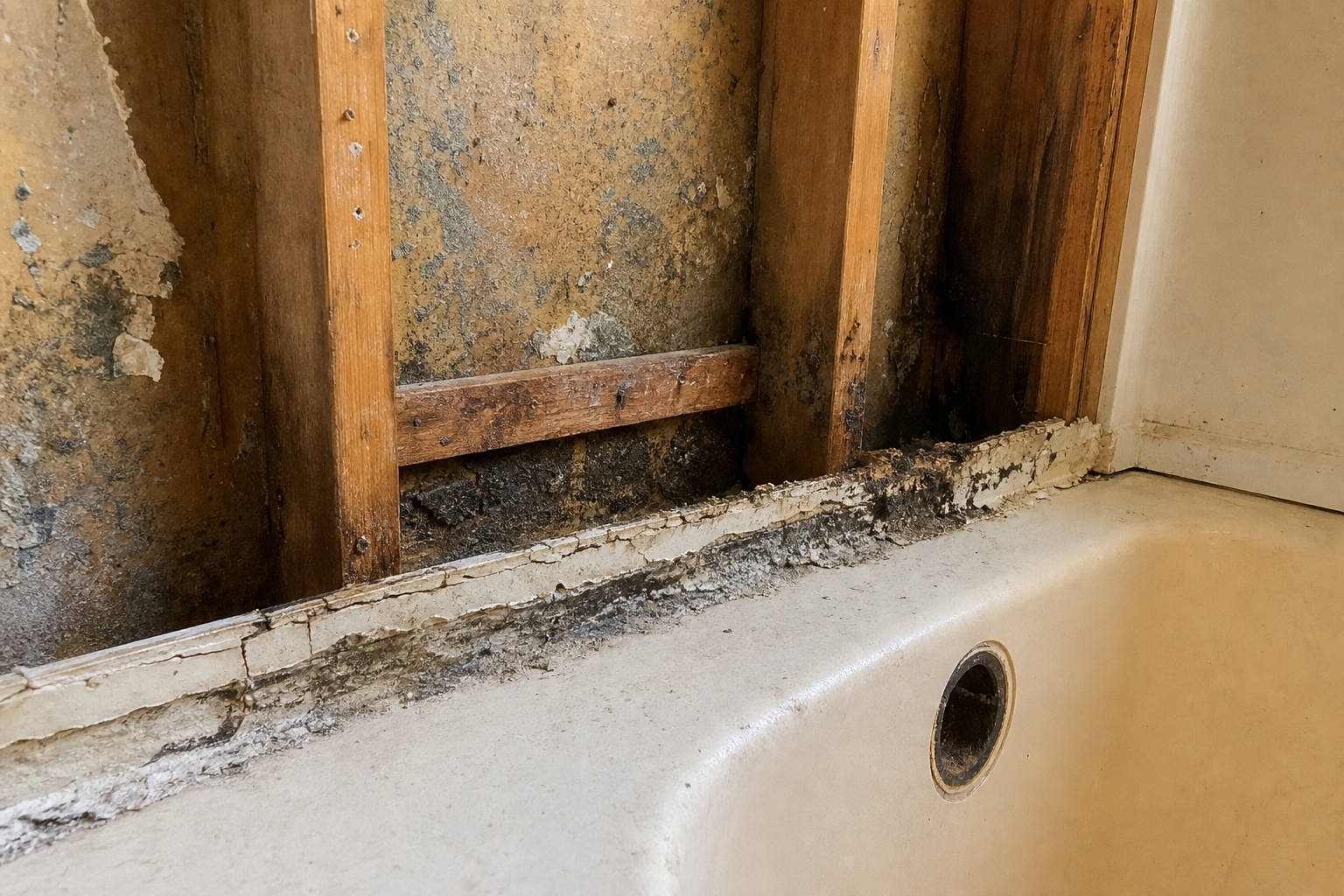
Rotted subfloor under a fixture. When a slow leak has gone on long enough to soften the floor around a toilet or tub, I open it up, replace what's gone bad, and rebuild it before anything new goes back down.
A lot of what I get called for looks the same from Elizabethton to Johnson City to Kingsport, because the housing stock is a similar age and baths in particular were rarely sealed the way they'd be built today.
A soft, spongy floor around the toilet or the tub, where a slow supply-line or wax-ring leak has been feeding the subfloor for months without anyone noticing until the flooring starts to give. Caulk that's failed at the tub or shower seam, letting water get behind the surround and into the wall cavity where it can sit and rot the framing out of sight. Loose or cracked tile where the substrate underneath has flexed or gotten wet. Cabinets and vanities original to the house, still functional but worn past the point of looking finished. Rot under a vanity where a slow drain leak or a supply line that's wept for years has gone unnoticed behind the cabinet doors.
Sometimes reaching the real problem means opening up a wall, and when that happens I handle the drywall repair behind a bath job myself rather than sending you to a second contractor for a hole I made getting to the leak.
Kitchens and baths take a harder beating here than the rest of the house, and the climate is a big part of why. We're humid and wet down in the valley — better than 45 inches of rain a year — and that humidity doesn't stay outside. It sits in bathrooms with weak ventilation, feeding mold at the caulk lines and slowly rotting the wood behind tile and trim. Winter freeze-thaw adds to it, stressing supply lines that run along exterior walls until a fitting finally lets go.
Older valley housing stock makes it worse. Much of the region's homes are decades old, and the original kitchens and baths were rarely sealed or flashed the way we'd do it now — so a leak that would've been caught early in a newer build has had years to spread quietly behind the walls.
Up in the NC High Country — Boone, Banner Elk, Blowing Rock — there's a second problem on top of the climate. A lot of those homes are cabins and second homes that sit empty for weeks between visits, plus heavy rental turnover between guests. A slow leak under a bathroom vanity or behind a shower surround can spread for a month before anyone's there to catch it, and by the time someone walks in, a fixture problem has become a floor problem.
Here's the honest version, because it's your money. If it's contained — a fixture, a section of tile, a vanity, a cabinet, a re-caulk — that's mine, and it's a fraction of the cost of a full gut. Most of what I get called for in a kitchen or bath falls right in that lane.
Where I'll tell you to slow down is a full gut remodel, a wall coming out, or a re-pipe that touches the main supply lines. Some of that is still mine to scope with you. Some of it crosses into what a licensed plumber or a licensed general contractor should be doing, and when it does I'll say so plainly and point you to a plumber I'd trust on my own house rather than stretch past what I should be touching. That's the whole idea behind having someone in your corner who isn't trying to sell you the biggest version of the job before you sign a contract for a full remodel.
Anybody can caulk over a seam or screw a new faucet on. Doing it so it lasts is the whole difference:
Finding the water first. If there's a leak behind the problem, I find it before anything goes back together. Sealing over an active leak just hides it for a while and lets the damage keep spreading unseen.
100% silicone in wet areas, not painter's caulk. Tub and shower seams need real silicone sealant, not the acrylic caulk that's easier to tool but fails against standing water within a season.
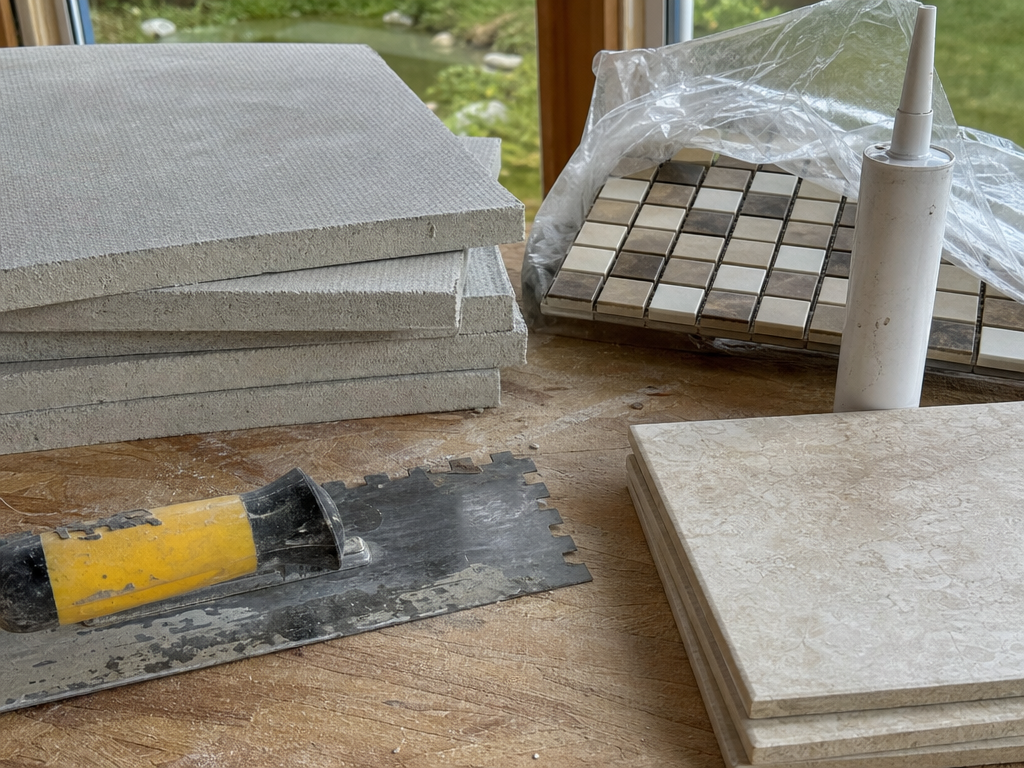
Cement backer board under tile. Tile going over drywall or bare plywood in a wet area is a callback waiting to happen. Backer board is what keeps tile and grout from cracking loose when the substrate underneath gets damp.
Sealing every penetration. Supply lines, drain lines, fan vents — anywhere a fixture passes through a wall or floor gets sealed properly, not just caulked over on the surface.
Leaving it watertight, not just clean-looking. A repair that looks finished but isn't actually sealed underneath is the kind of shortcut that comes back as a bigger job in a year.
Most of the "repairs" I get called in to redo share the same handful of shortcuts. Fresh caulk laid straight over mildew instead of a cleaned, dry joint. Tile set over a floor that was already soft, so the new tile cracks within months of the old problem it was covering up. A fixture swapped without ever checking the shutoff or the supply line behind it, so the new faucet leaks the same way the old one did. Paint slapped over water-damaged trim or a stained ceiling to get a house ready for a showing. Every one of those looks fine for a little while and is back — usually worse — by the next humid summer or wet winter. I would rather find the real cause once than have you pay for the same spot twice.
1. You call and send a photo or two. A picture of the fixture, the tile, or the trouble spot helps me show up prepared instead of guessing.
2. I come look — and I find the real cause, not just the symptom you called about. A cracked tile or a failed caulk line is often standing in for a water problem underneath.
3. You get the honest scope — a repair, a bigger job, or "this needs a licensed plumber or GC, and here's who I'd call." No upsell, no scare tactics.
4. We get it on the calendar. I'm a one-man shop, so I tell you straight when I can be there instead of promising tomorrow and not showing up.
5. I do it right and walk it with you. If something isn't sitting the way you pictured, I would rather fix it on the spot than have you tell a neighbor otherwise.
On a kitchen or bath repair, the material matters as much as the labor. I use 100% silicone sealant in every wet area — tubs, showers, sink backsplashes — because it's what actually holds up against standing water where acrylic caulk gives out. Tile goes over cement backer board in wet locations, not bare drywall, so grout lines don't crack loose the first time the substrate takes on moisture.
For fixtures, I work with quality name-brand hardware — Moen, Delta, Kohler and similar — chosen to match what's already in the house or what's actually available on the market, not the cheapest part on the shelf. Same honest-advisor approach as everything else: I'll tell you what's worth spending a little more on and what isn't, because the fixture you're not replacing again in two years is usually the better deal.
How do I know if this is a handyman repair or a full remodel?+
Call and describe what's going on, or send a photo. If it's a fixture, a section of tile, a vanity, or a re-caulk, that's mine. If it's a full gut or a re-pipe, I'll tell you straight and point you toward the right licensed trade instead of stretching to take on a job I shouldn't.
Can you fix a single cracked or loose tile?+
Yes — single tile repair and re-grouting is common handyman-scope work, as long as the floor or wall underneath is still sound. If it isn't, I'll tell you before I start rather than tile over a problem that's going to crack the new work loose.
How soon can you get to a kitchen or bath repair?+
I'm a one-man shop, so I'll tell you honestly where I stand on the calendar instead of promising tomorrow and not showing. Active leaks and running toilets get priority — call and I'll give you a straight answer on timing.
Do you paint or finish the space when you're done?+
I seal and finish everything I install — silicone, grout, trim — but I don't do finish painting. I know good painters and I'll point you to one if the room needs a fresh coat after the repair.
Is it just the fixture, or is something worse going on underneath?+
That's exactly what I check before I touch anything. A leaking faucet or a failed caulk line is often standing in for water damage behind it, and I'd rather find that on the first visit than have you call me back in six months for a bigger repair.
Do you do full kitchen or bath remodels?+
Full redos are call-and-ask — describe the scope and I'll tell you if it's handyman work or something that needs a licensed contractor. Either way, an independent read on your estimates is worth having before you sign anything.
Before you hand a contractor $40,000 for a kitchen or bath rebuild, have someone in your corner who's built these for 25 years.
Get an independent read on your estimates