A doorknob hole, a hairline crack, a patch of texture that never quite matched — I fix drywall the way a finish carpenter would: clean, smooth, and invisible once it's painted.
Drywall is one of those things nobody thinks about until it's damaged, and then every homeowner wants the same thing — for it to look like nothing ever happened. That's the job:
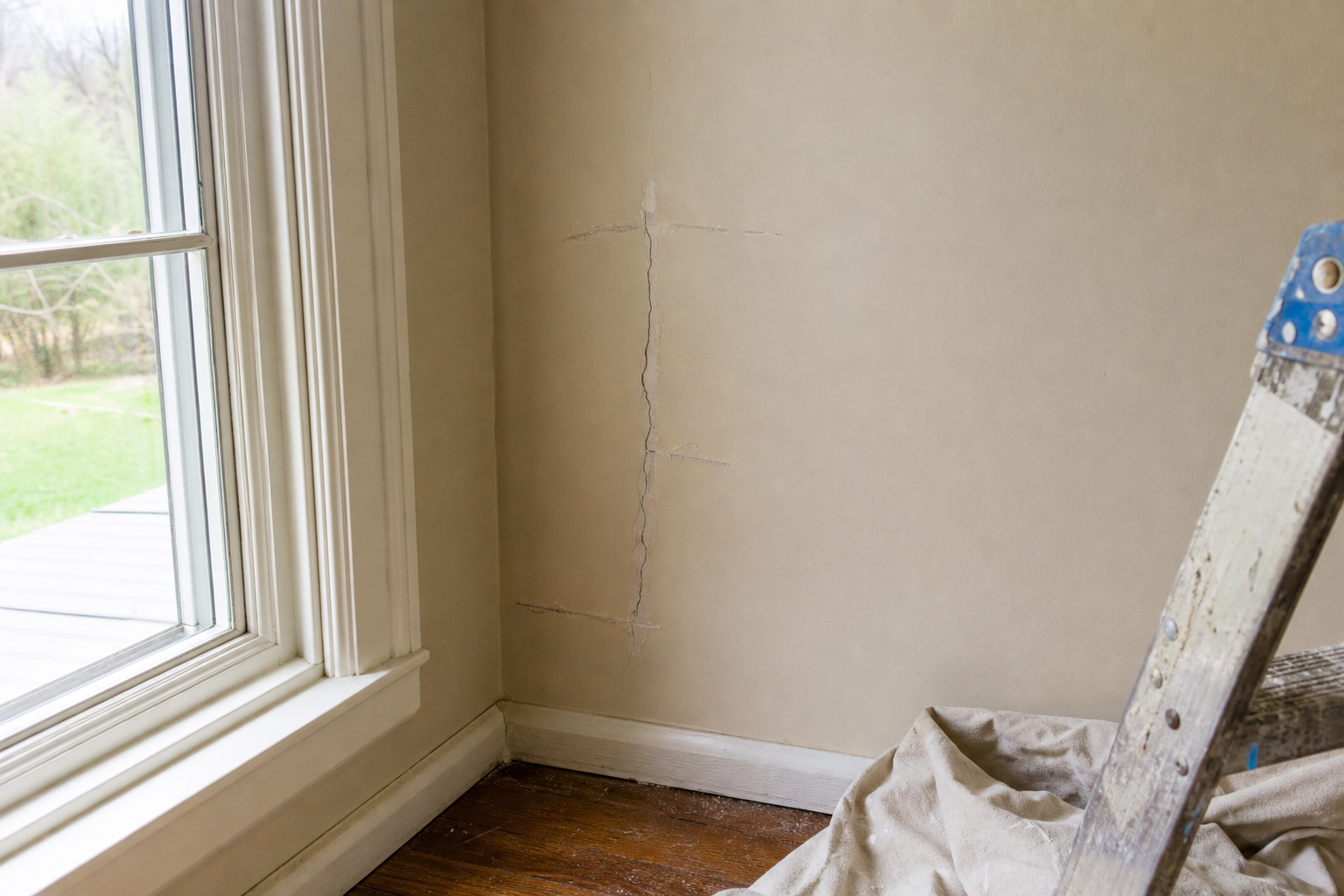
Cracks and hairline splits. Over doorways, at ceiling corners, running out from window frames — most of these are settling cracks, and most of them can be repaired so they don't telegraph back through the paint.
Holes and patches. A doorknob punched through the wall, a chunk knocked out moving furniture, an old thermostat or alarm panel that came off and left a gap. Small holes and large ones both get cut back to solid, backed properly, and finished flush.
Water-damage cutouts. Where a leak has stained or softened the board, I cut out the damaged section and tie new drywall in clean — once the source of the water is handled.
Nail and screw pops. Those little raised dots along a wall or ceiling where a fastener has worked loose. An easy fix that most homeowners just live with for years.
Texture matching and corner-bead repair. Matching knockdown, orange-peel, or smooth finish so a patch doesn't stand out, and rebuilding a dinged or cracked corner bead so the edge is straight again.
Ceiling repair and patching after a mount or fixture comes out. Ceilings crack and stain differently than walls and take more care to blend. And when a TV mount, shelf bracket, or old fixture comes down, I anchor and patch after a mount comes down so the wall is ready for whatever goes up next — or just clean if nothing does.
Drywall repair also runs into other trades more than most people expect. When the damage drops down to the floor, I coordinate baseboard and floor transitions so the bottom of the wall matches the top instead of leaving a visible seam where two contractors' work meets. And drywall in a bath remodel gets the same moisture-aware treatment as the rest of the space — different board, different compound, same care about what's behind the wall.
A lot of what I get called for looks familiar from Elizabethton to Johnson City to Kingsport, because the housing stock shares the same age and the same handful of habits that show up in drywall over time.
A crack running diagonally out from the top corner of a door or window frame, from the house settling a little more every year. Nail pops marching along a ceiling seam where the framing has moved and popped the fastener loose. A brownish stain in the corner of a ceiling or the top of a wall — the fingerprint of a roof leak or a plumbing line that's been dripping somewhere out of sight, sometimes for a long time before anyone notices. Cracked or crumbling corners where a wall gets bumped over and over. A doorknob hole from a door that swings too far and has nothing to stop it. When a repair opens into the framing behind the wall, I handle the carpentry and trim repair in the same visit instead of leaving you to find a second contractor for a hole I made getting to the first problem.
A new door or window install almost always leaves rough drywall edges behind too — I handle the finish work of patching around new doors and windows so the opening looks like it was always there, not retrofitted in afterward.
Drywall doesn't move on its own — it moves because the house underneath it moves, and this region gives a house a lot of reasons to move. Much of the housing stock down in the valley — Elizabethton, Johnson City, Kingsport — is decades old, and older framing keeps settling long after the house was built, which is why cracks tend to reappear at the same weak points: door corners, window corners, and the seam where a ceiling meets a wall.
Underneath that settling is the ground itself. Clay-heavy, expansive soils around here swell when they're wet and shrink when they dry out, and freeze-thaw cycles through the winter push and pull at the foundation season after season. Every one of those small foundation shifts works its way up into the framing and reopens a crack that was patched with nothing more than a dab of mud the last time.
On top of that, we get more than 45 inches of rain a year, and that humidity swells wood framing and pops fastener seams that a drier climate would never touch. Up in the NC High Country — Boone, Banner Elk, Blowing Rock — it's a different kind of hard on a house. Cabins and second homes at 3,000 to 4,000 feet see big swings between summer humidity and winter cold, and a lot of those homes sit empty for weeks or months at a stretch. A slow leak or a hairline crack has all the time in the world to spread before anyone's there to see it — by the time an owner opens the place back up, a small stain has often become a section of ceiling that needs cutting out.
Here's the honest version. A crack, a hole, a section of damaged board — that's a patch, and it's mine. Cut it back to solid, back it properly, tape and finish it, match the texture, and it disappears.
Where I draw the line is widespread water damage or anything that looks or smells like mold. If a stain is spreading, soft, or keeps coming back no matter how many times it's painted over, patching the drywall without finding the source just buys you a repeat visit in a year. That means finding and fixing whatever's actually causing it first — a roofer for a roof leak, a plumber for a pipe — before I touch the wall. And if what you're looking at is actual mold growth rather than a stain, that's a job for a mold remediation specialist, not a handyman repair. I'll tell you straight which one you're dealing with rather than mud over it and hope. For anything that's turning into a bigger scope than a patch, having someone in your corner who isn't trying to sell you the biggest version of the job is worth having before you commit to a contractor.
Anybody can smear mud over a hole. Making it disappear is the whole difference:
Cutting back to solid. Damaged and crumbling board comes out until what's left is sound, even if that means the patch ends up bigger than the original hole.
Backing the patch properly. A floating patch flexes and cracks again. I back it so it's tied into something solid, not just bridging open space.
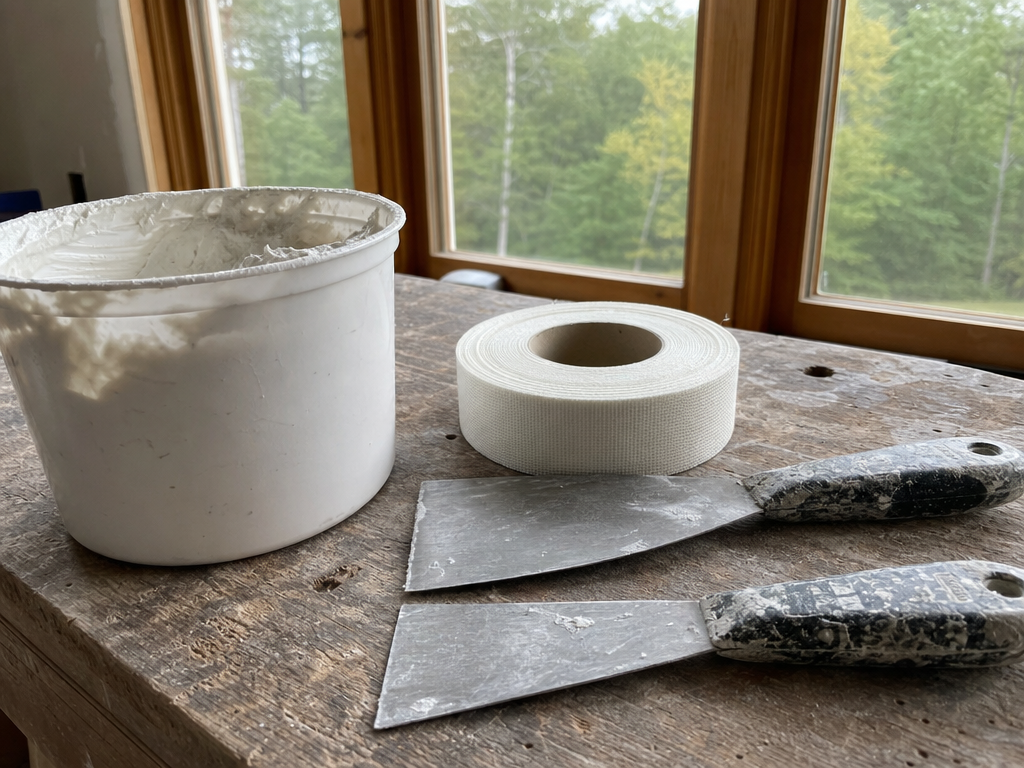
Setting-type compound for strength. On repairs that need to hold, I use setting-type ("hot mud") compound instead of standard joint compound, because it cures harder and resists cracking under movement.
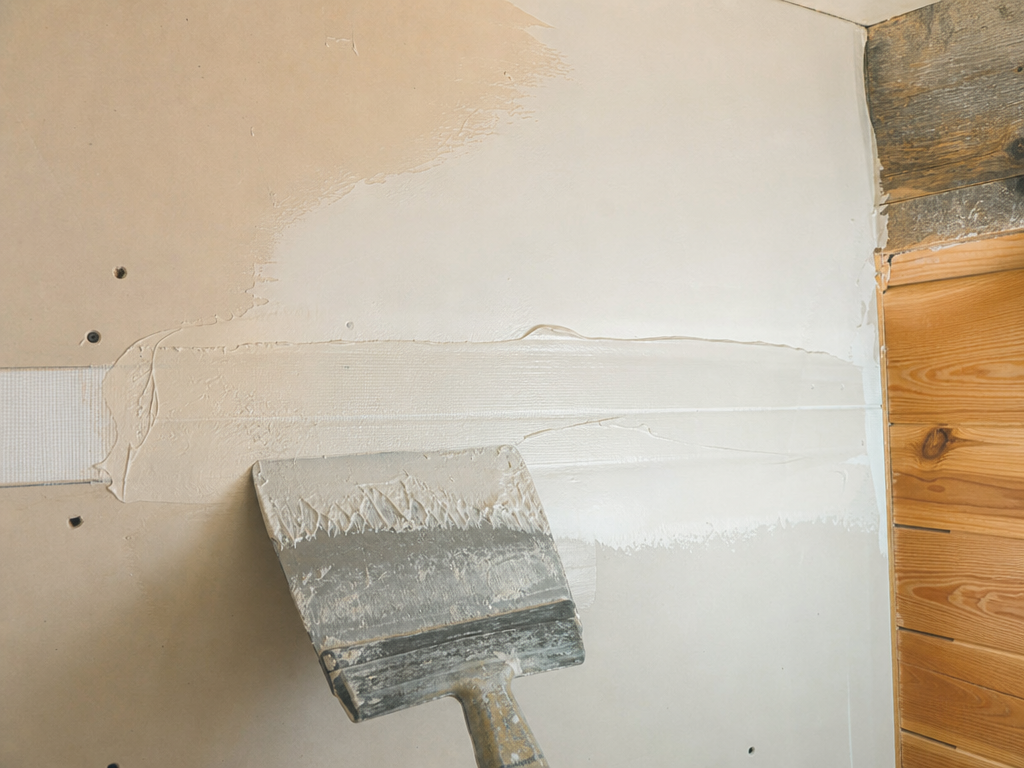
Paper tape on cracks. Mesh tape is fine on new seams, but a moving crack gets paper tape embedded in setting compound — it has the strength to keep a repaired crack from opening back up.
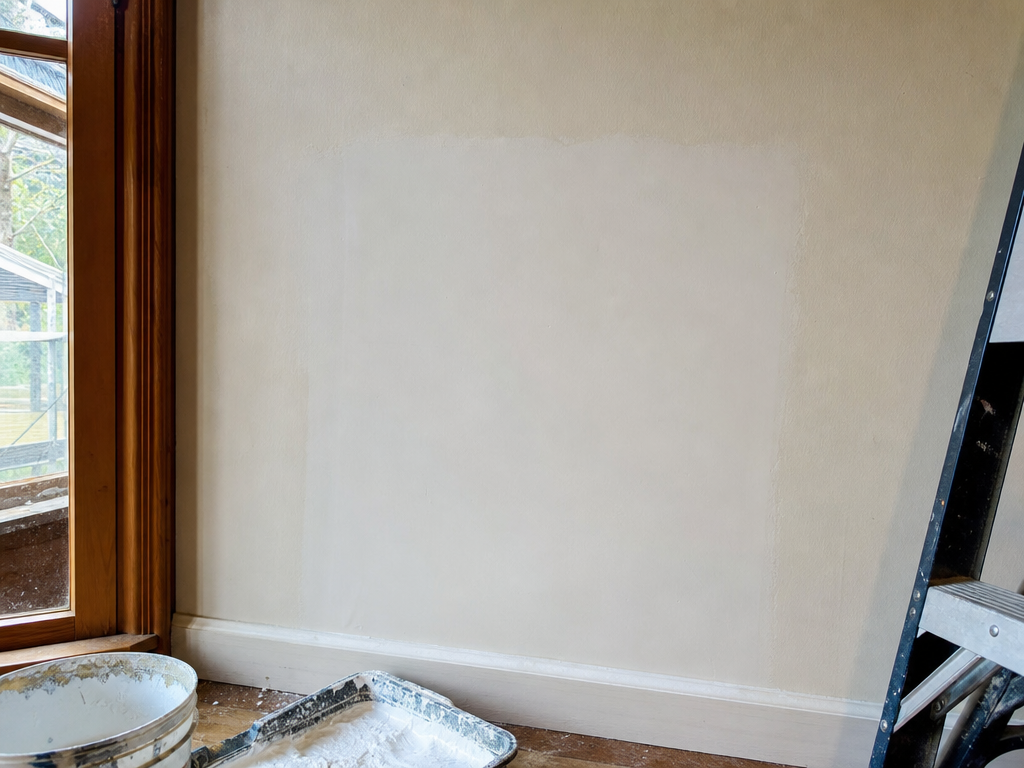
Feathering wide. A patch that's feathered out several inches beyond the repair blends into the wall. A patch feathered an inch is a patch you can see from across the room.
Matching texture so it disappears. Knockdown, orange-peel, smooth — matched close enough that the eye moves right past it, and primed so it's ready for paint the day I leave.
Most of the drywall "repairs" I get called to redo share the same handful of shortcuts. A dab of mud smeared over a structural crack with no tape underneath, so the crack telegraphs right back through the paint within a season. Mesh tape slapped over a joint that's actually moving, when only paper tape and setting compound have the strength to hold it. Texture that stands out worse than the hole it was covering, because it was never blended or feathered wide enough. And paint applied straight over a water stain without ever finding or fixing the leak behind it — which just hides the problem long enough for it to come back bigger and darker than before. Every one of those looks fine walking out the door and is back within the year. I would rather do it once and never hear about that spot again.
1. You call and describe the damage. A photo or two helps me show up with the right materials the first time.
2. I come look and check for a cause, not just the hole or crack itself — especially if there's any sign of water involved.
3. You get the honest scope — a straightforward patch, or "this needs the leak fixed first, and here's who I'd call for that." No mudding over a problem that isn't solved yet.
4. We get it on the calendar. I'm a one-man shop, so I tell you straight when I can be there instead of promising tomorrow and not showing up.
5. I repair it, texture it, and prime it. The wall is ready for paint when I leave — and if the patch isn't blending the way you expected, I'd rather fix it on the spot than have you notice it every time you walk by.
On repairs that need real strength — a crack, a structural patch, anything that's moved before — I use setting-type joint compound (Durabond or Easy Sand-style "hot mud") instead of standard pre-mixed compound, because it chemically cures rather than just drying, and holds up to movement far better. Cracks get paper tape embedded in that compound, since it has the tensile strength mesh tape doesn't.
Where board has to be replaced outright, I use name-brand drywall like USG Sheetrock so the new section matches the thickness and performance of what's already on the wall, and I keep the texture tools on hand to match knockdown, orange-peel, or smooth finish so the patch blends instead of standing out. One thing I don't do is paint — once the wall is repaired, textured, and primed, that's where my part ends. I know good painters in the area and I'll point you to one rather than hand you a rushed paint job that doesn't match the rest of the room.
Will the crack just come back?+
Not if it's repaired right. A crack patched with paper tape set in setting-type compound and backed properly holds up to the normal seasonal movement of a house. A quick smear of mud with no tape is what comes back — that's the shortcut I'm fixing when I redo someone else's patch.
Can you match my texture?+
Yes — matching orange peel, knockdown, and smooth finishes is standard drywall work. The goal is a patch that disappears once it's primed and painted, not one you can spot from across the room.
Do you paint after the repair?+
No — I prime everything I repair so it's ready for paint, but finish painting is a refer-out. I know good painters in the area and I'll point you to one.
There's a water stain on my wall or ceiling — what does that mean?+
It means water got in from somewhere, and painting over the stain won't stop it from coming back. I'll help you figure out whether it's an active leak or an old one, and if the source is still live, that's a roofer or a plumber to call before the drywall gets patched.
How long does a typical drywall repair take?+
A single hole or crack is often a same-day job, though setting compound and texture need time to cure between coats, so I may need two visits close together rather than one long one. Larger patches or multiple spots take longer — I'll give you a realistic timeline on the walkthrough.
Do you do whole-ceiling or large water-damage jobs?+
Contained sections, yes. If a whole ceiling or large area is compromised, I'll tell you honestly whether it's still a repair or has crossed into a bigger rebuild that needs a GC, and an independent read on your estimates is worth having before you commit to that scope.
Before you hire your next contractor, have someone in your corner who's built these for 25 years.
Get an independent read on your estimates