Fixture Changeouts · Tri-Cities, TN

Light Fixture & Device Changeouts — Tri-Cities, TN

I swap out light fixtures, switches, and outlet devices — clean, level, and working right. New wiring runs and troubleshooting go to a licensed electrician, and I'll tell you plainly when that's the case.

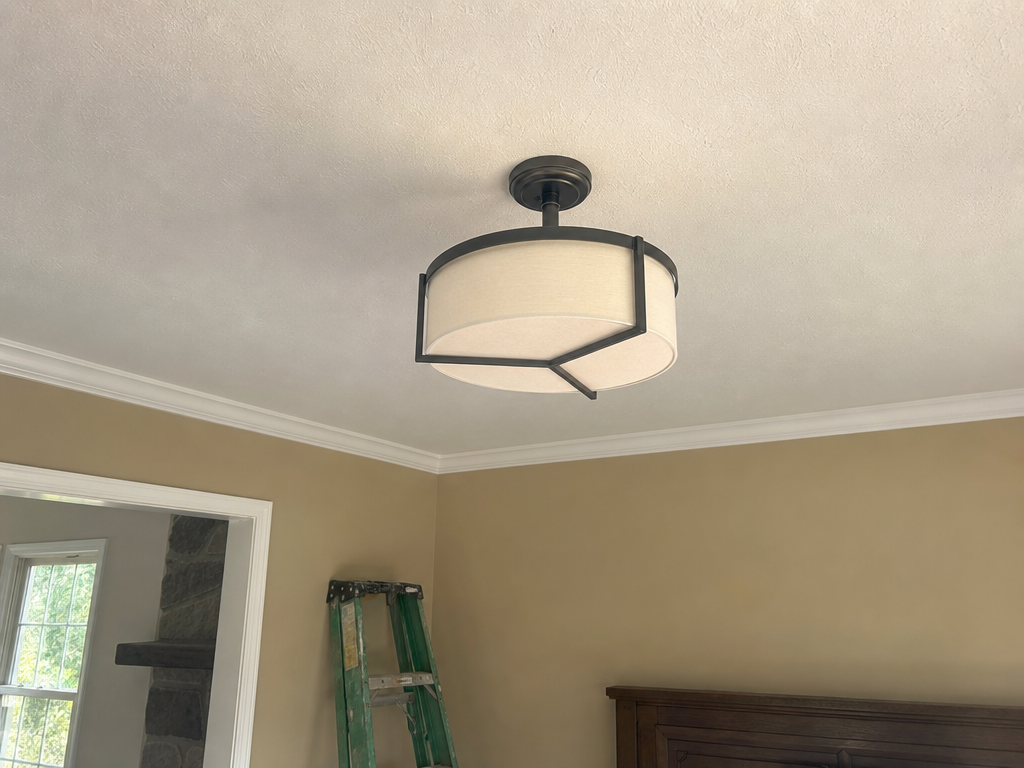
Cleanly installed modern ceiling light fixture

Light Fixture & Device Changeouts I Handle Across the Tri-Cities

I want to be straight with you up front: I'm not an electrician. What I do is swap out fixtures and devices that already exist for new ones — clean, level, and wired the way they were before, just better. These are the jobs I get called for most:

Light fixture swaps. Ceiling lights, vanity lights, pendants, flush mounts — out with the dated fixture, in with the one you picked out, on the existing box and wiring.

Ceiling fans on fan-rated boxes. If the box is already rated to carry a fan, I'll hang it, balance it, and wire it in. If it isn't, that's not a changeout anymore — I'll tell you honestly and point you to an electrician who can install the right box first.

Vanity lights. Bathroom fixture work is some of the most common of all, and I handle vanity lights and disposal switches as part of routine kitchen and bath repairs.

Switches, outlets, and dimmers. Straight swaps — a tired switch, a worn outlet, upgrading a plain switch to a dimmer on the same circuit. It's the same care I bring to outlet placement behind a mounted TV so the cords and plug disappear behind the screen.

Smart switches & thermostats. Where the wiring already supports it, I'll install a smart switch or a smart thermostat in place of the old one and get it working. It's the same kind of device swap as wiring in power for an over-range microwave or a disposal when a new appliance goes in.

Bathroom exhaust fans. Swapping a noisy or worn-out fan for a new one on the same wiring and vent path.
Common Fixture Problems in Older Tri-Cities Homes

A lot of what I get called out for looks familiar once you've seen it a few times, because so many homes in this area share the same age and the same original fixtures:

A dated fixture nobody's gotten around to updating in decades — still working, just tired, or simply not what the room needs anymore. A ceiling fan that wobbles because it's hanging on a box that was never rated to carry one in the first place, which is more common than you'd think in older construction. A light with no wall switch, wired to a pull chain or a lamp cord because that's how it was done at the time. A bathroom fan that's never vented right, running loud and doing little, because the duct run or the fan itself was undersized from day one.

None of that is pricing — every one of those is a different scope, and I'll tell you what you're actually looking at before anything comes off the wall. It's also why better lighting for aging-in-place safety comes up so often — a dim hallway fixture or a light with no wall switch is a real fall risk, and it's often a simple changeout to fix.

Fixtures, Older Homes & Safety in the Tri-Cities & High Country

Down in the valley — Elizabethton, Johnson City, Kingsport — a lot of the housing stock is decades old, and it still carries the original fixtures, boxes, and devices from whenever the house was built. That means undersized boxes, boxes that were never rated for a fan even though one's hanging there now, and in some of the older homes, two-prong outlets or wiring that predates anything code requires today.

Up in the High Country — Boone, Banner Elk, Blowing Rock — a lot of what I see is cabins and second homes that sit empty for weeks or months at a stretch. A flickering fixture or a fan that was never mounted quite right doesn't get noticed, because nobody's standing under it most of the year. By the time an owner's back for the season, it's been quietly wrong for a long time.

A changeout is a good time to catch something like that. I'm not there to diagnose your wiring, but if I open a box and see something that isn't right — old cloth wiring, a box that's not rated for what's hanging on it, a connection that looks off — I'll tell you plainly and point you to a real electrician instead of just closing it back up.

When It's a Changeout vs. an Electrician's Job — How to Know

Here's the honest version, because it matters more here than almost anywhere else in the house. If you're swapping a fixture, fan, or device for a new one on the same box, same wiring, same circuit — that's mine, and it's the bulk of what I do every week.

Where I stop is anything involving new circuits, panel work, running new wiring, troubleshooting a dead or tripping circuit, or anything behind the wall. Aluminum wiring, which shows up in some homes from a certain era, is also not something I touch — that needs a licensed electrician who works with it regularly. I'm not going to guess at something I'm not licensed or trained for, and I'd rather tell you that up front than have you find out the hard way. That's the same idea behind having a contractor in your corner who tells you the truth about scope instead of stretching to cover a job that isn't mine.

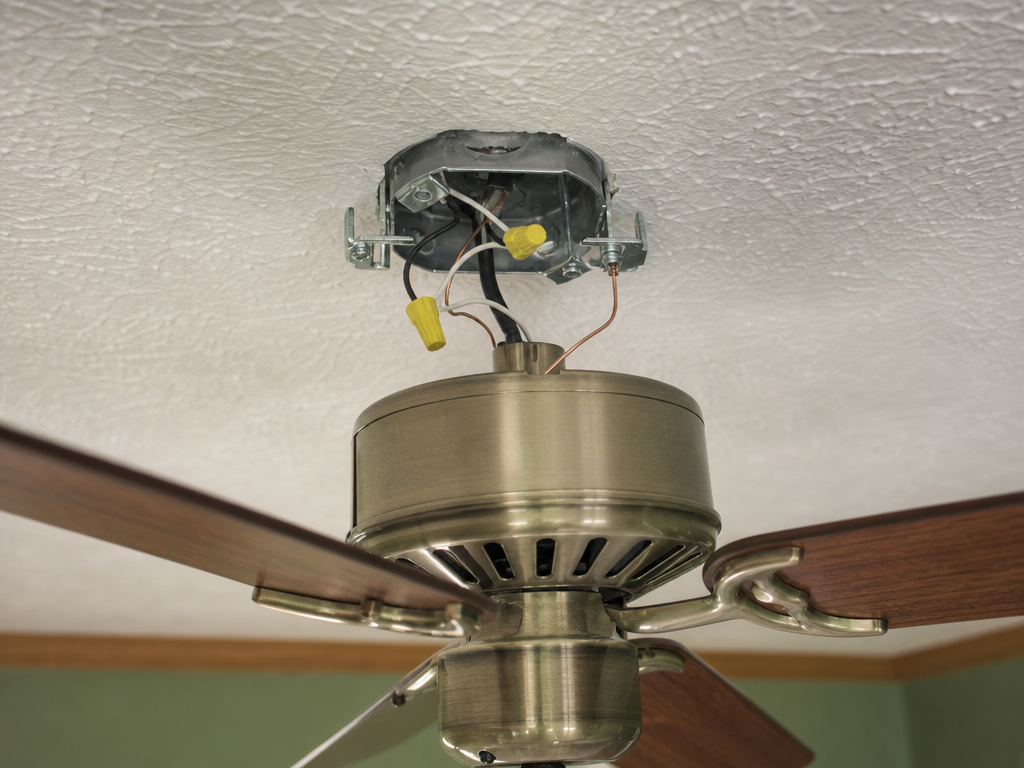
Ceiling fan mounted to a fan-rated box with neat connections

What a Fixture Changeout Done Right Actually Involves

A fixture swap looks simple from the outside. Doing it so it's safe and lasts takes a few things nobody sees once the cover plate's back on:

Kill the power and test it dead. Every time, before anything gets touched — not assumed, tested.

Check the box is rated for the load. Especially with fans. A box that's fine for a light fixture isn't automatically fine for a fan, and I check before I hang anything heavier than what was there.

Solid connections. Wire nuts sized and twisted right, nothing loose, nothing relying on tape to hold.

Correct grounding. Every fixture and device gets grounded the way it's supposed to be, not skipped because it's easier.

Secure mounting. Fixtures and fans get mounted so they don't sag, wobble, or work loose over time — especially fans, which put a lot more stress on a box than a static light ever does.

Nothing left loose in the box. Every connection gets pushed back in clean, with the cover seated flush, not crammed shut over a mess of wire.

Fixture Work Done Wrong — And Why It's Dangerous

This is the one area of the house where a shortcut isn't just going to look bad — it can start a fire. A heavy ceiling fan hung on a box that was never rated to carry it, so the box slowly pulls loose from the framing under the constant motion. Backstabbed connections — wires pushed into the back of a switch or outlet instead of wrapped and screwed down — that work themselves loose behind the wall over months of use. A device with no ground, so a fault has nowhere safe to go. A fixture crammed into a box that's too small for the wiring inside it, with everything folded and jammed to get the cover to close. Overloaded connections that heat up slowly, invisibly, behind a wall or above a ceiling, with nothing to show for it until something fails. I would rather spend the extra ten minutes doing it right than leave you with any of that behind a cover plate.

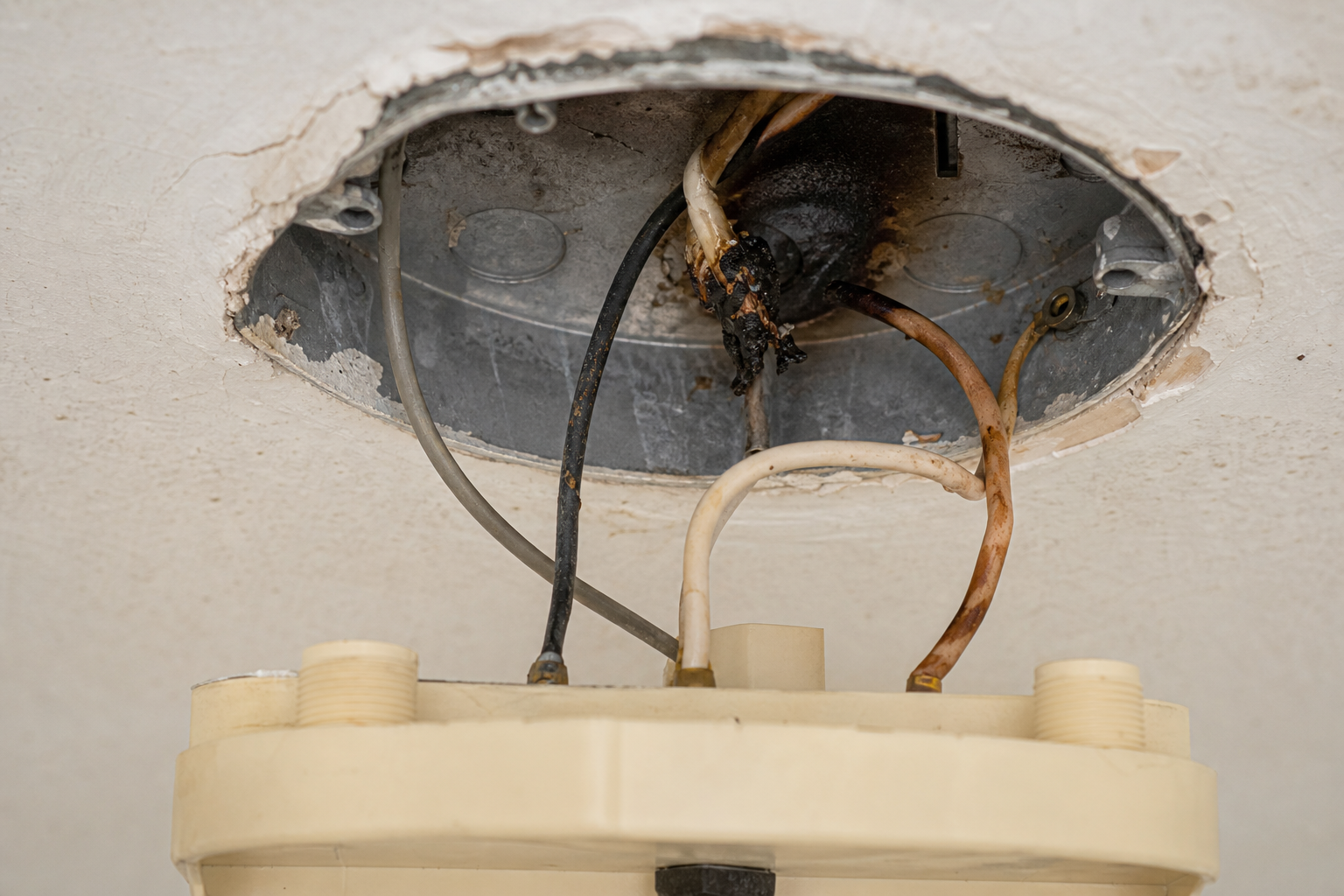
An overheated, loose wire connection at a fixture box
A loose or overloaded connection heats up over time — the reason a fixture on the wrong box or wiring is worth getting right.

How a Fixture Job Goes With Me

1. You call and tell me what you're swapping. A photo of the old fixture and the new one helps me show up with the right connectors and hardware.

2. I take a look at the box and wiring before anything comes off. If it's a straight changeout, we move ahead. If it isn't, I tell you why.

3. You get the honest scope — a changeout I can do today, or a job that needs a licensed electrician first. No guessing at something I shouldn't.

4. We get it on the calendar. I'm a one-man shop, so I tell you straight when I can be there instead of promising tomorrow and not showing up.

5. I test everything before I leave. Power back on, fixture or device working, cover plate seated clean — I don't consider it done until it's actually done.

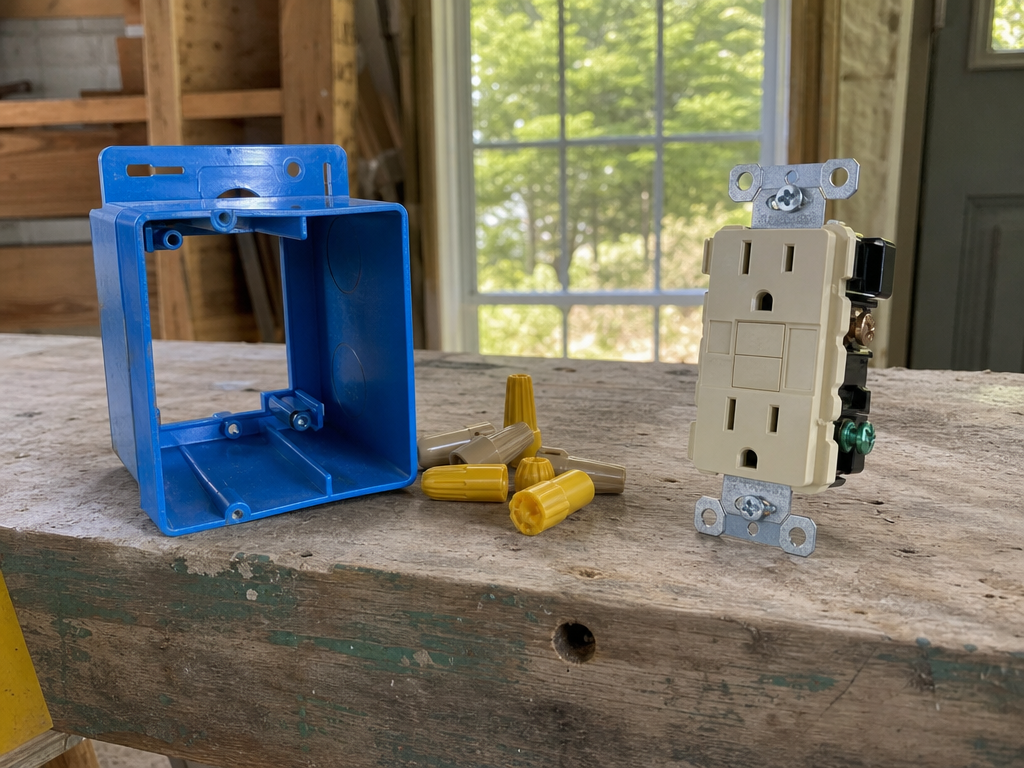
Fan-rated box, wire connectors, and a GFCI outlet on a workbench

Materials I Use

Where a box needs to be upgraded to carry a fan, I use a proper fan-rated box, not a standard light box pressed into service. Every connection gets quality wire connectors sized to the wire, not whatever's cheapest in the bin. Where code calls for it — bathrooms, kitchens, anywhere near water — GFCI outlets go in, no exceptions.

For fixtures, fans, and devices themselves, I work with name-brand products as examples chosen to match the room and last — nothing bargain-bin that's going to fail early and put you right back where you started. The goal is the same as everywhere else in the house: do it once, with the right materials, and not hear about that fixture again.

Frequently asked questions

Can you install my ceiling fan?+

Yes, if there's an existing box rated to carry a fan. If the box isn't fan-rated, that's not a changeout anymore — I'll tell you honestly and point you to a licensed electrician who can put the right box in first.

Do you do new outlets or circuits?+

No. New circuits, new wiring runs, and panel work are a licensed electrician's job. I'm not an electrician, and I'll say so and point you to one rather than take on something outside what I'm licensed to do.

Why does my ceiling fan wobble?+

Usually one of two things — the fan itself needs balancing, or the box it's mounted to isn't rated to carry a fan and is flexing under the motion. I can tell you which on a look, and fix the first; the second needs an electrician to correct the box.

Can you swap a regular switch to a dimmer or smart switch?+

Yes — where the existing wiring supports it, that's a standard device changeout.

Do you troubleshoot a dead circuit?+

No — diagnosing a dead or tripping circuit is a licensed electrician's job. I'll point you to one instead of guessing at something I'm not equipped to trace.

How long does a fixture changeout take?+

A straightforward fixture or device swap is usually well under an hour. A ceiling fan or a run of several devices takes longer. I'll give you a realistic window when you call.

Planning something bigger than a repair?

Before you hire your next contractor, have someone in your corner who's built these for 25 years.

Get an independent read on your estimates

Serving the Tri-Cities & NC High Country

Get your fixture changeout on the calendar